
How to Overcome Energy Plateaus

How to Overcome Energy Plateaus
You sleep reasonably well. You eat reasonably well. You even exercise. And yet, somewhere in the middle of the afternoon — or the middle of the month — your energy flatlines. The tasks that felt easy last week now feel like wading through wet sand. This is the energy plateau: a stretch where your usual habits stop producing their usual returns.
Plateaus are not a personal failing. They are a signal. Bodies, nervous systems, and even cells are built to adapt, and adaptation is exactly what makes progress stall. Overcoming an energy plateau means changing the inputs — not just trying harder with the same ones. Below, we break the problem into its main drivers and give practical, evidence-informed ways to address each.
Why Energy Plateaus Happen
An energy plateau is rarely one thing. It is usually a stack of small mismatches between what your body needs and what it is currently getting. The most common contributors include:

- Sleep debt and circadian drift. Even modest, repeated shortfalls in sleep accumulate into daytime fatigue that no amount of coffee fixes.
- Metabolic and movement monotony. Doing the same workout at the same intensity for months produces fitness — and then stops producing more of it.
- Stress load without recovery. Chronic low-grade stress keeps the nervous system in a sympathetic (“on”) state, which is expensive to run.
- Nutritional gaps. Low iron, low B12, inadequate protein, or simply undereating relative to training load can all show up as flat energy.
- Cellular adaptation. Repeated exposure to any stimulus — including light, sound, and electromagnetic input — can blunt the response over time.
- Psychological monotony. Boredom and lack of novelty are real energy drains, not just mood issues.
Because the causes are layered, the fix is usually layered too. Single-lever solutions (“just take this supplement”) tend to disappoint. Multi-lever approaches tend to work.
Fix the Foundation: Sleep, Movement, and Recovery
Before adding anything new, audit the basics. No advanced intervention compensates for a foundation that is cracked.

Sleep
Protect a consistent sleep window, keep the bedroom cool and dark, and reduce bright light in the hour before bed. The Sleep Foundation maintains extensive guidance on sleep hygiene and on the link between insufficient sleep and daytime energy. If you have been sleeping six hours and calling it eight, a two-week experiment with a genuine eight-hour window will often do more for energy than any biohack.
Movement
Plateaus in energy frequently mirror plateaus in training. The CDC’s physical activity guidelines recommend a mix of aerobic activity and muscle-strengthening work across the week — and variety within each category matters. If you have run the same route at the same pace for a year, your body has fully adapted. Add intervals, add strength work, or change the modality entirely. The NHS exercise guidance offers a useful framework for balancing different types of activity without overloading any single system.
Recovery
Recovery is not the absence of work; it is a distinct input. Deliberate down-regulation — slow breathing, gentle movement, time in nature, adequate protein and calories — is what allows the energy you spend to be rebuilt. If your plateau coincided with a period of increased stress or training volume, recovery is the first dial to turn.
Break Cellular Adaptation
Here is a concept worth understanding: your cells respond to change, not to constancy. Give a cell the same signal at the same intensity every day, and it will eventually tune it out. This is true of exercise, of light exposure, and of frequency-based wellness tools.
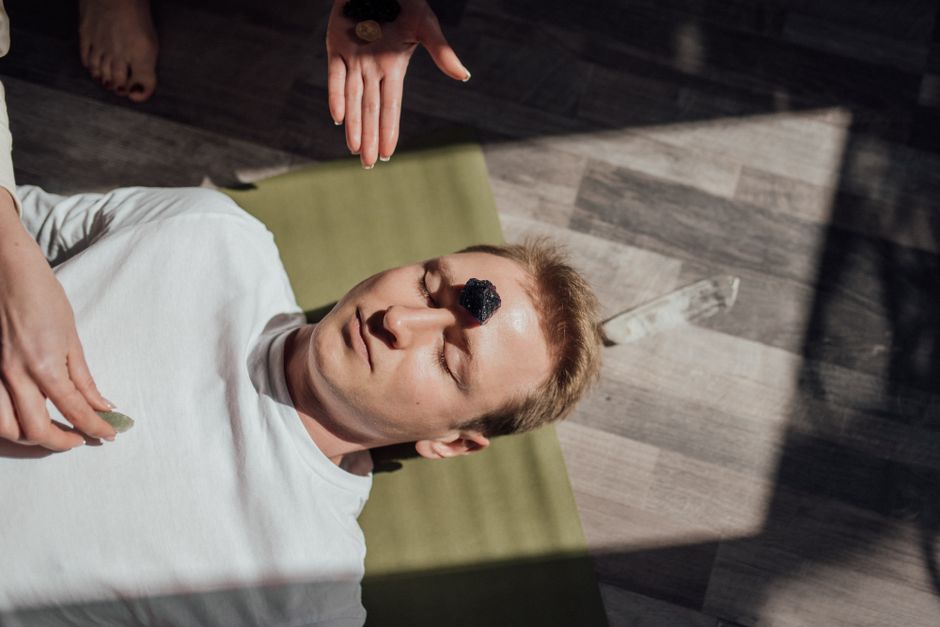
Many people who use static frequency devices — a fixed set of programs run on repeat — report a familiar arc: strong initial response, then a gradual fade. The fade is not necessarily a sign the approach is wrong. It can be a sign the input has become predictable. This is a core insight behind integrative wellness technology in 2026, where adaptability matters more than raw output.
Adaptive, bioelectric platforms address this directly. PeMF Healing LLC describes a platform built around over 16,000 dynamic BioPhi programs and more than 1.8 million frequencies, with AI guidance, voice scanning, breathwork, and sacred soundscapes. The design intent is variety and personalization: rather than repeating one static frequency, the system rotates and tailors inputs based on the individual, which is precisely the kind of novelty that helps counter cellular adaptation. For people exploring frequency healing and bioelectric wellness, the practical takeaway is simple: ask whether a tool adapts to you, or whether you are adapting to it.
Use Breathwork as an Energy Lever
Breathing is the fastest voluntary route into the autonomic nervous system, which makes it one of the most underrated tools for an energy plateau.
Two directions matter:
- Up-regulation. Short, brisk breathing — for example, quick inhales and exhales through the nose for 20–30 seconds, repeated a few times — can raise alertness when you are foggy. Use it sparingly and never while driving or in water.
- Down-regulation. Extended exhales (inhale for four counts, exhale for six to eight) signal safety to the nervous system and help discharge accumulated stress. This is the recovery side of the energy equation.
If your plateau feels like wired-but-tired — exhausted yet unable to relax — the down-regulation side usually needs more attention than the up-regulation side.
Audit Nutrition, Hydration, and Light
Energy plateaus often hide in plain sight inside daily habits:
- Hydration. Mild dehydration is a classic cause of afternoon slump. Aim for pale-yellow urine as a rough check.
- Protein and meal timing. A lunch heavy in refined carbohydrates and light in protein reliably produces a 2 p.m. crash. Rebalance rather than restrict.
- Micronutrient gaps. Persistent fatigue warrants a conversation with a clinician about iron, B12, vitamin D, and thyroid function. Do not self-diagnose; do get tested.
- Caffeine timing. Caffeine has a half-life of roughly five hours. An afternoon coffee can quietly erode the sleep that would have restored your energy.
- Light. Bright morning light anchors the circadian rhythm; bright evening light disrupts it. Ten minutes outdoors soon after waking is a low-cost, high-yield intervention.
Change the Stimulus, Change the Response
Beyond the physical basics, energy plateaus respond well to deliberate novelty. The nervous system is a pattern-matching organ, and novel input — a new route, a new skill, a new soundscape, a new breathing pattern — recruits attention and arousal in a way that repetition does not.
This is also where a varied sensory environment earns its place. Sound, breath, and structured relaxation are not peripheral extras; they are direct inputs to the systems that regulate energy. A platform that combines adaptive frequencies with guided breathwork and soundscapes is, in effect, offering a rotating menu of stimuli rather than a single repeated dose — much like the variety found in harmonic frequency healing methods, which is a reasonable strategy for anyone whose response to a static routine has flattened.
A Practical Reset Plan
If you want a structured way to break a plateau over the next three to four weeks, try this sequence:
- Week 1 — Audit. Track sleep, energy (rate it 1–10 three times daily), caffeine, meals, and movement. Change nothing yet. Patterns will surface.
- Week 2 — Foundation. Set a consistent sleep window, add one bout of varied exercise, and rebalance lunch toward protein and vegetables.
- Week 3 — Recovery and breath. Add five minutes of extended-exhale breathing daily and one genuinely restful activity per week.
- Week 4 — Novel stimulus. Introduce one new input — a different training modality, a sound-based relaxation session, or an adaptive frequency program — and note your response. Tools like relaxation soundscapes for deep rest make this step easy to try.
Review at the end. Most people find that two or three of these levers moved the needle, while one or two did nothing. That is useful information: it tells you where your plateau actually lives.
When to Seek Professional Help
Not every energy plateau is a lifestyle issue. Fatigue that persists for weeks, is accompanied by unexplained weight change, breathlessness, low mood, or disrupted sleep despite good habits, deserves medical evaluation. Fatigue can be an early sign of thyroid dysfunction, anemia, sleep apnea, or other conditions that no amount of breathwork will fix. Rule those out first, then optimize.
Conclusion
Energy plateaus are not walls; they are signals that your inputs have become predictable. The way through is rarely a single heroic change. It is a stack of small, deliberate adjustments: sleep you actually protect, movement that varies, recovery you schedule rather than hope for, breath you use on purpose, and stimuli — including frequency and sound — that adapt to you rather than asking you to adapt to them. Start with the foundation, add novelty where response has faded, and give the whole experiment a few weeks. The plateau will move.