The 9 Solfeggio frequencies, explained.
From 174 Hz to 963 Hz, each tone carries a traditional intention. Play all nine free, generated live as 32-bit float, uncompressed pure tone on iOS, Android and web.
From Gregorian chant to modern sound practice
Guido of Arezzo and Ut queant laxis
The Benedictine monk Guido of Arezzo taught singers to read music using the hymn to St. John the Baptist, Ut queant laxis. Each line began one note higher, giving the syllables Ut, Re, Mi, Fa, Sol, La. Ut later became Do, and solfege was born.
Gregorian chant
Monks sang these hymns as Gregorian chant: unaccompanied, slow, breath-led melody sung for hours in resonant stone halls. The power people describe came from voices, overtones and space working together, not from one fixed pitch. Medieval chant had no standard Hz tuning at all.
The modern Solfeggio frequencies
Dr. Joseph Puleo described deriving six frequencies (396 to 852 Hz) from numerical patterns in the Book of Numbers, later popularized by Dr. Leonard Horowitz. 174, 285 and 963 Hz were added afterward. The Hz values are modern, not medieval.
Each frequency and its intention
Grounding, steadiness and a sense of physical safety.
Traditionally linked to renewal and a feeling of wholeness.
Letting go of fear, guilt and old patterns.
Clearing what is stuck and making room for new direction.
Often called the love frequency. Associated with harmony and renewal.
Relationships, communication and emotional balance.
Clarity, honest expression and problem solving.
Inner awareness and a return to spiritual order.
Associated with the crown and a sense of oneness.
These intentions come from tradition and modern sound practice, not clinical proof.
Exact tones, generated live
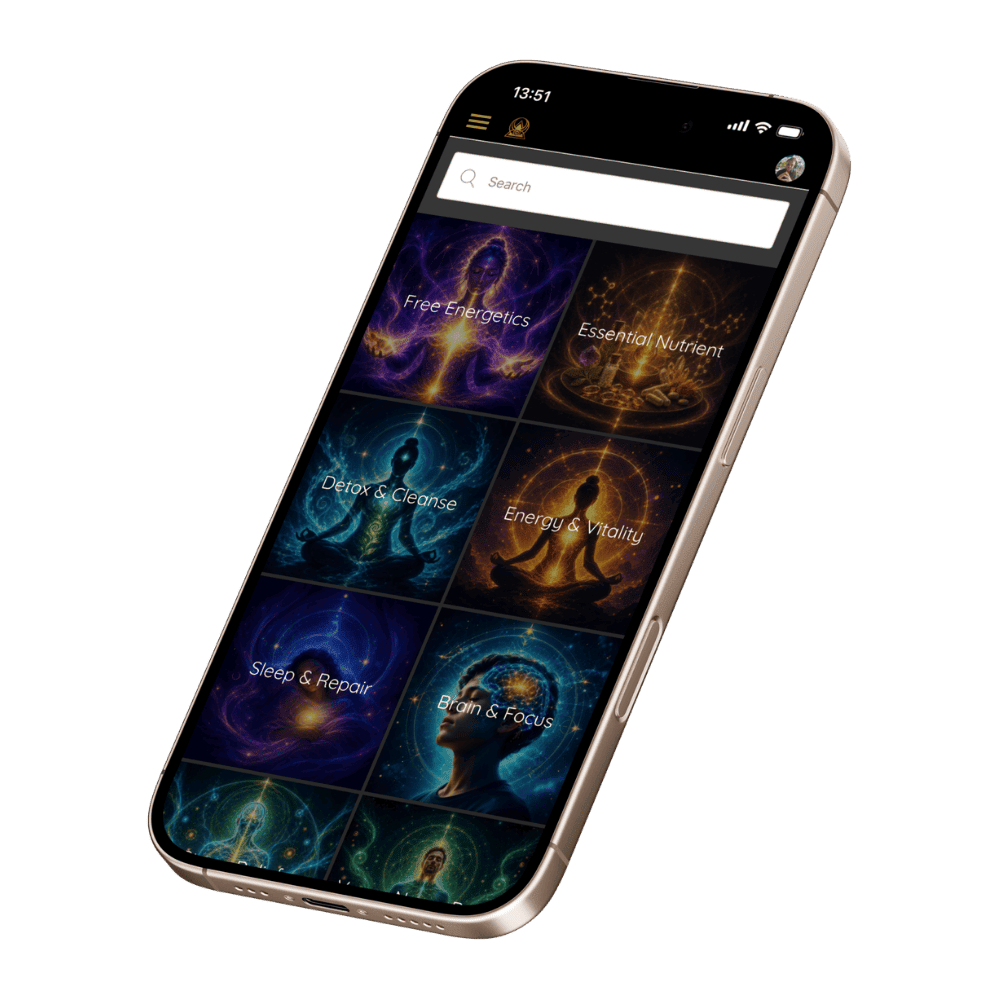
Most Solfeggio tracks online are compressed recordings. The app computes every tone on your device in a 32-bit float engine, uncompressed, so 528 Hz is exactly 528 Hz.
Solfeggio inside BioPhi programs
Play a single carrier, or use Solfeggio tones inside adaptive BioPhi programs and the Haptic Lounge, where the signal evolves instead of repeating. See why on the Rife machine app page, or build your own in Mantra Synth.
Static Solfeggio alone does very little. Harmonics change everything.
The problem with one static tone
A single pure sine wave looped for an hour is one of the most unnatural sounds there is. Nothing in nature holds one exact pitch without change. The body and the nervous system habituate to an unchanging stimulus, so its effect fades fast. That is cellular adaptation, and it is why a looped 528 Hz video often feels like nothing after a while.
It also strains your ears. A constant pure tone concentrates all its energy on one narrow spot in the inner ear. Played loud and for long periods, especially on earbuds, it causes listening fatigue and ringing, and sustained loud exposure can contribute to permanent hearing damage. Keep volume low and take breaks with any tone.
What BioPhi harmonics do instead
BioPhi programs treat a Solfeggio tone as a carrier, not the whole program. Around it they build harmonic and subharmonic layers, golden ratio intervals, binaural beats, Schumann 7.83 Hz pulses and phase sequences that evolve across the session, the way natural sound does.
The energy spreads across a rich spectrum instead of hammering one point, so it is gentler to listen to, and the signal keeps changing so the body never fully settles into adaptation. Same Solfeggio intention, a far more complete signal.
A few harmonic Solfeggio programs
A small sample. The platform holds many more harmonic Solfeggio programs.
- Root-to-Crown 7-Phase Phi-Harmonic Binaural Vortex Solfeggio
- God Frequency 963 Hz: 6-Phase Vortex Toroidal Field
- 528 Hz Sacred 5-Phase Full Spectrum
- 432 Hz Full Spectrum Golden Ratio Harmonic Sweep
- 528 Hz (R), 432 Hz (L) and 7.83 Hz (C) Binaural Beats
- Base 12 Binaural Beats, All Solfeggio Frequencies
- 432 Hz + 12th Subharmonics, Calm and Grounding
- 432 Hz, 528 Hz with Tibetan Sacred Moon Bowls
What studies have looked at
Research is early and small, and none of it proves a cure. These are the studies most often cited.
In a small study of healthy adults, music tuned to 528 Hz was linked to lower salivary cortisol and signs of reduced stress compared with standard 440 Hz tuning.
Music tuned to 432 Hz was associated with a slight drop in heart rate and higher listener satisfaction than the same music at 440 Hz.
A lab study reported that 528 Hz sound exposure reduced ethanol-induced cell death in human astrocyte cultures. This was in a dish, not in people.
Why the PEMF Healing platform took a different route. Every study above tested music or rich sound, not a lone sine wave. Chant itself was never a single tone: it is voices, overtones, breath and changing melody. So we build Solfeggio the same way, as harmonic BioPhi programs, instead of looping one static frequency.
Solfeggio FAQ
Are static Solfeggio tones bad for you?
A single static pure tone is not dangerous at a low, comfortable volume, but it is the least effective and most fatiguing way to listen. The body habituates to an unchanging signal, and a loud constant tone concentrates energy on one spot in the inner ear, which can cause ringing and, with sustained loud exposure, hearing damage. Harmonic BioPhi programs spread energy across a richer spectrum and keep evolving, which is why we build Solfeggio that way.
Why do harmonics matter for Solfeggio frequencies?
Natural sound is never a single pitch. Harmonics, subharmonics, golden ratio intervals and binaural layers give a Solfeggio carrier context and movement, so the signal stays engaging instead of fading into adaptation. BioPhi programs use the Solfeggio tone as the anchor and build a living, phase-based signal around it.
What are Solfeggio frequencies?
Solfeggio frequencies are a set of nine tones, from 174 Hz to 963 Hz, that modern sound practitioners associate with specific intentions such as grounding, release, connection and intuition. The six core tones (396 to 852 Hz) were popularized in the 1970s and 1990s, and 174, 285 and 963 Hz were added later.
Are Solfeggio frequencies scientifically proven?
No. The intentions linked to each tone come from tradition and contemporary sound practice, not clinical proof. Many people use them for relaxation, meditation and focus. They are not a medical treatment and do not diagnose, treat, cure or prevent any condition.
Can I play Solfeggio frequencies for free?
Yes. The Solfeggio program family is part of the Freemium tier in the Frequency Healing app on iOS, Android and web, and the nine carriers are also built into the Haptic Lounge. No credit card is needed.
What makes the app different from a Solfeggio YouTube video?
Most videos are compressed MP3 or AAC audio. The app generates each tone live in a 32-bit float engine, uncompressed, so the frequency stays exact. You can also layer Solfeggio carriers inside adaptive BioPhi programs instead of looping one static tone.
How should I listen?
Use good headphones or speakers at a comfortable, low volume. Start with 10 to 20 minutes in a quiet setting, choose the tone that matches your intention, and notice how you feel. Haptic devices and PEMF coils can also be used with the app.
Everything in the free tier: see Freemium.
Start your bioelectric session today.
Freemium on iOS, Android, and the web. One account, every device.