
Malachite Heart Stone: A 12-Part Heart Circle Guide
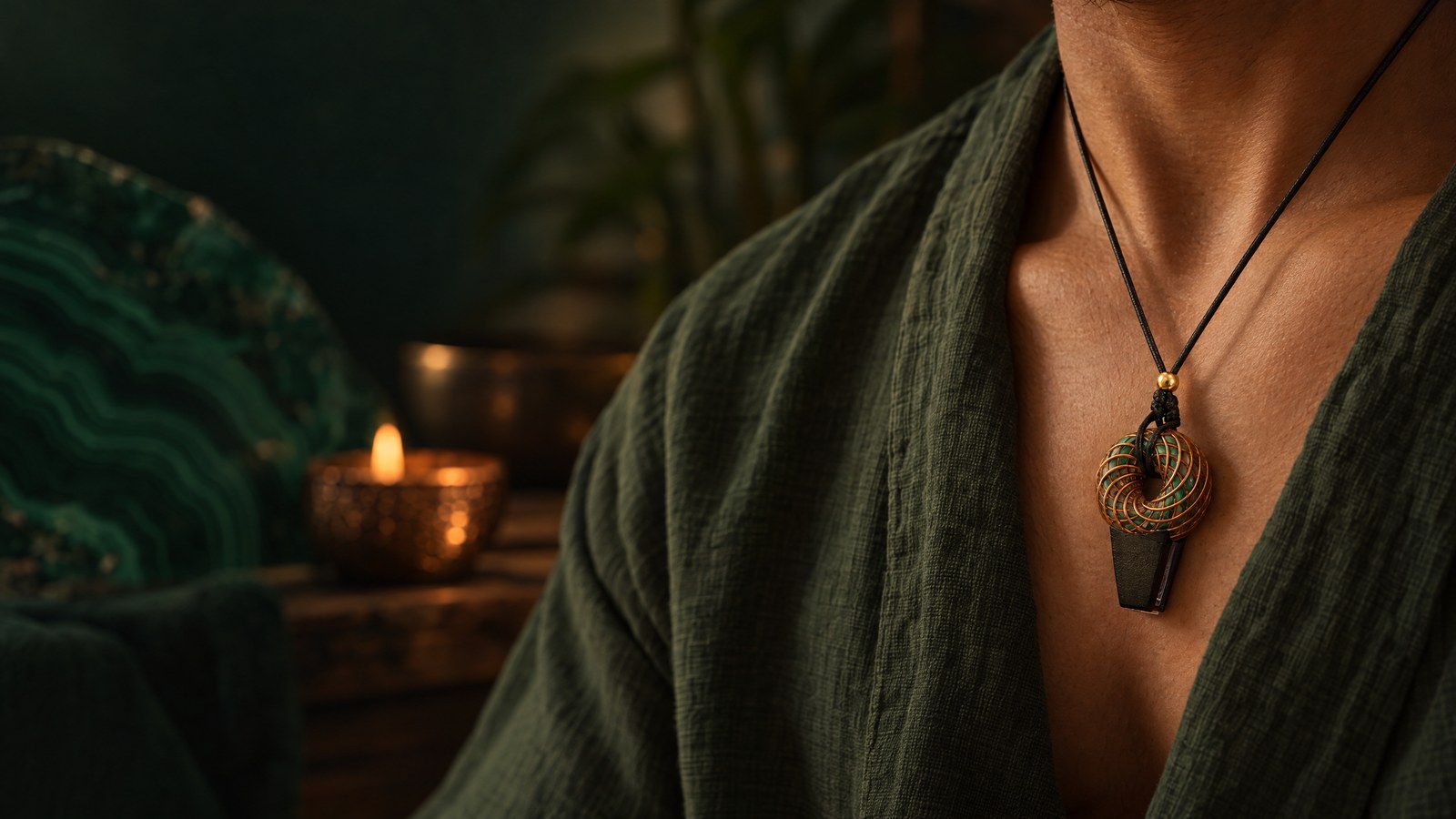
Malachite is not merely a green decorative stone. It is a copper carbonate hydroxide mineral with a deep history in pigment, ornament, and early metallurgy. The Malachite Heart Stone reframes that history as a modern, heart-centered practice: a wearable object, a moment of paced breathing, an intentional cue, and a structured listening routine. Its value is in the practice architecture, not a claim that a gemstone diagnoses, treats, or changes a medical condition.
Quick answer: The Malachite Heart Stone is best understood as a consumer-wellness ritual built around a malachite-themed Heart Stone iTorus i1 pendant and a 12-part Heart Circle of linked PEMF Healing App programs. The directly researched anchor is comfortable paced breathing and intentional attention. The mineral’s cultural meanings are real as history and symbolism. They are not evidence that malachite, a pendant, or a program provides copper, replaces clinical care, or produces a particular health outcome.
Primary Heart Circle session: Begin each practice day with Heart-Brain Love Matrix: 5-Phase Neurocardiac, Autonomic & Compassion BioPhi Energetics. The five-phase title describes a designed wellness session, not a clinical indication or a promise of autonomic, cardiac, or emotional treatment.

What is the Malachite Heart Stone?
At the material level, malachite is a bright green copper carbonate hydroxide mineral, typically described as monoclinic and relatively soft, with a Mohs hardness of roughly 3.5 to 4.[1] Its banded surface is a natural mineral pattern, not a biological measurement and not a map of a person’s energy or health.
At the historical level, copper minerals including malachite belong to the early story of metallurgy. Archaeological work at Belovode and Pločnik in Serbia documents exceptionally early copper production and helps explain why green copper minerals have held such cultural weight for millennia.[2] Across art, ornament, and spiritual traditions, malachite has become associated with renewal, protection, affection, and transformation. Those meanings can enrich a personal practice as symbolic language. They do not become biomedical evidence simply because they are ancient.
At the product level, the Heart Stone iTorus i1 is described by its manufacturer as a phone-driven, wearable PEMF coil set into a crystal-resin pendant format, with a lanyard, strap, 3.5 mm audio cable, travel case, and other accessories. The manufacturer’s specifications describe the product. They do not establish disease-specific benefit, clinical equivalence, or a result from the Heart Circle routine.[3]

Who this Heart Circle is for
This collection is for a person who wants a repeatable heart-centered wellness ritual rather than an unstructured playlist. It is designed for reflective users who value a physical cue at the chest, quiet time, intentional breathing, music or binaural-style listening, journaling, and a coherent sequence of themed app sessions. It can suit a morning grounding practice, an evening decompression ritual, a gratitude practice, or a weekly check-in around connection and personal boundaries.
The meaningful benefit is often practical: a pendant can become a visible cue to pause, breathe more slowly, lower the noise of the day, choose one intention, and notice an observable change in attention, comfort, or routine. That is very different from claiming a mineral, field, or audio program treats chest symptoms, cardiac disease, anxiety disorders, grief, trauma, or any other condition. The platform’s own disclaimer likewise frames its material as wellness and educational content, not a medical device or disease treatment.[7]
The strongest measurable doorway: paced breathing
A heart-centered ritual becomes more useful when it includes one action with a well-described physiological basis. Slow, comfortable breathing near six breaths per minute has been studied in heart-rate-variability biofeedback and cardiorespiratory-resonance contexts. In those research settings, paced breathing can influence the relationship among respiration, heart-rate variability, and baroreflex processes.[4][5] That evidence supports a simple practice cue: breathe comfortably, do not strain, and let the breath serve attention rather than performance.
It does not show that a pendant creates the same changes, that a person should chase a particular HRV number, or that paced breathing is appropriate for every symptom. Dizziness, pain, panic, faintness, or breathlessness are reasons to stop and seek appropriate clinical advice.
Why the material story matters, without turning it into a medical claim
The Heart Stone format places a material with a recognizable human history at the center of a contemporary sensory practice. Malachite is a copper-bearing mineral, and copper is an essential dietary trace element. These are distinct facts. Nutritional copper comes from diet and is regulated as a nutrient. Wearing malachite does not deliver dietary copper, and a digital program does not substitute for nutrition, medication, testing, or clinical treatment.
The product design also names Rose Quartz, Pink Tourmaline, and Rhodonite themes. They can be used as aesthetic and symbolic prompts for tenderness, warmth, and reflection. The responsible conclusion is not that the named materials pharmacologically act on the body. It is that material, color, touch, expectation, and ritual can make a practice memorable and personally meaningful.
Precision matters here. Malachite is not quartz. Its reported 2/m crystal class is centrosymmetric, so the generic claim that every crystal is piezoelectric is not appropriate for malachite.[1][9] The Heart Stone’s active element, when it is connected and playing, is the powered coil described by the manufacturer, not an unsupported assertion that crushed malachite generates a therapeutic electrical charge.
From a static object to a designed Heart Circle
The design distinction is important. A stone can remain a beautiful daily-wear object. A Heart Circle adds a repeatable sequence: choose an intention, use a selected program, optionally add audio, haptic feedback, or a consumer coil, then leave quiet space to notice the experience. The goal is not to make a stronger medical claim. It is to give a reflective practice an intelligible beginning, middle, and close.
Why use a five-phase primary program? A phase-based title communicates progression rather than a single unchanging cue. Across sensory systems, repeated and unchanging stimuli can undergo adaptation, while changing sensory statistics shape how signals are represented.[10] That supports a design rationale for varying attention, pacing, sound texture, and reflection across a session. It does not establish that any consumer program prevents cellular adaptation, resets the nervous system, or is clinically superior to another audio approach.
This is the practical advance: instead of reducing a reflective practice to one static tone or one symbolic object, the Heart Circle can organize intention, paced breathing, audio, optional haptics, optional coil use, and a journal observation into one designed ritual. Each layer remains optional. Each layer has a different role. None should be presented as a substitute for health care.

What the program can organize
| Design layer | Practical job | What can responsibly be concluded |
|---|---|---|
| Malachite pendant | A tactile, visual, and symbolic cue for a chosen practice. | It can support ritual consistency and meaning. It is not a source of dietary copper or a medical treatment. |
| Five-phase primary session | A named, staged container for focused listening and reflection. | It reflects program design. The title alone does not establish a clinical outcome. |
| Comfortable slow breathing | A low-tech anchor for attention and cardiorespiratory pacing. | Slow-breath research supports this as a practice context, not as a diagnosis or a guarantee. |
| Stereo audio and optional haptics | Sensory channels that can make a session more immersive. | Use listening safety guidance and treat the experience as wellness, not clinical neuromodulation. |
| Journal observation | Turns a vague session into a record of what was noticed. | Track non-diagnostic observations, not proof of biological change. |
Optional 3+1 practice setup
For readers who enjoy a layered session, the setup can be understood as 3+1: a wearable coil, an audio layer, an optional haptic layer, plus the user’s own paced breathing and attention. It is a design framework, not a claim that combined modalities have been tested as a single medical intervention.
| Layer | Option | Practical role in the Heart Circle |
|---|---|---|
| Wearable Heart Stone | Heart Stone iTorus i1 | Use only with the manufacturer-supported connection method, placement, and safety instructions. Keep the pendant dry. |
| PEMF alternative | iTorus i2 or iTorus i5 | Consumer-wellness options for a seated or reclined listening practice. Follow each manufacturer’s placement and contraindication guidance. |
| Audio | Frequency Healing App with comfortable wired stereo listening | Use the app program as the organized listening layer. Stereo playback is required for binaural-style material, but a binaural beat is not established as a treatment. |
| Haptic | Woojer Vest 4 with code EPEMF10 | An optional body-awareness layer. Keep intensity comfortable and do not use sensation as a dose target. |
| Imprinting ritual | Metatronic Flower of Life Dual Frequency Imprinter | An optional ritual object. Do not treat imprinted water or an imprinter as medicine. |
For audio, the practical safety standard is simple: keep the volume down, take breaks, and use well-fitted listening equipment rather than raising the volume in a noisy space. The World Health Organization notes that both level and duration determine hearing risk.[11] Binaural-beat research remains heterogeneous, so stereo listening is best treated as a deliberate sound-design option rather than a clinical mechanism.[12]

How to use the Malachite Heart Stone safely
- Prepare a dry setting. The supplied codex and product format require dry-only care. Do not rinse, soak, mist, shower with, or intentionally wet the pendant. Do not sand, cut, lick, ingest, or create dust from malachite or a crystal-resin pendant. Copper can be harmful at high exposure, including by swallowing or inhalation, which is why dust creation and ingestion do not belong in any crystal practice.[8]
- Choose one intention. Use a short, present-tense statement such as “I will give this practice my full attention.” This is a self-direction cue, not a prescription.
- Connect and place only as supported by the manufacturer. Use the supplied connection method and follow the product’s instructions. Do not increase output in pursuit of a stronger feeling.
- Begin with the primary program. Sit or lie down comfortably. If headphones are used, begin at a low, comfortable volume.
- Use paced breathing only within comfort. A gentle five-second inhale and five-second exhale is one common practice pattern. Return to normal breathing if discomfort develops.
- Leave a ten-minute quiet gap. Do not stack the next program immediately. Use the pause to notice one non-diagnostic observation.
Important safety boundary: If you have a pacemaker, implanted cardiac or electronic device, are pregnant, have a seizure history, a serious condition, or are unsure whether a PEMF or magnetic device is appropriate, pause and seek clinician and manufacturer guidance first. FDA guidance warns that magnets and consumer electronics can interfere with implanted medical devices and recommends keeping potentially interfering consumer electronics at least six inches away, with individualized clinician advice.[6] Chest pain, pressure, shortness of breath, fainting, sudden neurologic symptoms, or other emergency symptoms require urgent medical assessment, not a wellness session.
A seven-day Malachite Heart Circle
Structure for every day: Run the primary session first. Then choose the two linked companions shown below. Leave a ten-minute quiet gap between programs. Follow each program page’s stated session length and do not add extra exposure to chase a result. At the end of day seven, take a one-week pause before considering an optional repeat.
What to notice, and what not to overinterpret
Keep observations simple: Did you make time to sit down? Was your breath comfortable? Did you stay at a comfortable listening level? Did the pendant help you remember the intention? Did a particular program feel like a fit for a quiet morning or a night of reflection? These are reasonable wellness observations. Do not use a subjective response to infer a diagnosis, circulation change, electromagnetic dose, copper status, or treatment effect.
The collection may be most useful when it helps someone make a repeatable practice more humane: less rushed, less random, and more personally meaningful. Its power is in the quality of attention that the structure makes possible.
Educational and wellness disclaimer: This article is for educational purposes only. It does not provide medical advice, diagnosis, or treatment, and it does not establish that any program or device will produce a particular result. Do not delay or replace licensed medical care. Consult a qualified healthcare professional for symptoms, medical conditions, pregnancy, implanted electronic devices, medication questions, or any concern about whether PEMF is appropriate for you. Follow the manufacturer’s instructions for every device.
References
- Mineral Data Publishing. Malachite mineral data. Formula, monoclinic 2/m class, and hardness reference. Direct source.
- Radivojević, M., et al. (2010). On the origins of extractive metallurgy: New evidence from Europe. Journal of Archaeological Science. Direct source.
- iPyramids. Heart Stone iTorus i1 Portable PEMF Healing Device. Manufacturer product specifications. Direct source.
- Russo, M. A., et al. (2017). The physiological effects of slow breathing in the healthy human. Breathe. Direct source.
- Lehrer, P. M., and Gevirtz, R. (2014). Heart rate variability biofeedback: how and why does it work? Frontiers in Psychology. Direct source.
- U.S. Food and Drug Administration. Magnets, cell phones, and smart watches may affect pacemakers and other implanted medical devices. Direct source.
- Frequency Healing. Medical Disclaimer. Platform safety statement. Direct source.
- MedlinePlus. Copper poisoning. U.S. National Library of Medicine. Direct source.
- Damjanovic, D. (1998). Crystal chemistry of piezoelectric materials. Penn State research record. Direct source.
- Willmore, B. D. B., and King, A. J. (2023). Adaptation in auditory processing. Physiological Reviews. Direct source.
- World Health Organization. Deafness and hearing loss: Safe listening. Direct source.
- Chaieb, L., et al. (2023). Binaural beat stimulation: a systematic review of psychological and physiological effects. Direct source.
Related Articles
- Heart-Brain Love Matrix: 5-Phase Neurocardiac, Autonomic & Compassion BioPhi-Harmonic Energetics
- Vogel Crystal Light: The 7-Color BioPhi Collection Explained
- Calminity vs PEMF Healing: Static Frequency vs BioPhi Programs
Free resource: The Malachite Heart Stone Codex
Want the full companion guide? Download the Malachite Heart Stone Codex PDF, free. It expands the historical lenses, dry-only care, activation ritual, Heart Circle, and safety boundaries covered in this feature.
Explore PEMFHealing.app
Your companion for structured frequency programs and progress tracking.
Why full spectrum frequencies can feel stronger than a single tone
- Broader coverage across biological windows, not a narrow peak.
- Harmonics and sidebands can support entrainment and coherence.
- People vary by tissue state and time of day, so spectrum raises the chance of a match.
- Lower adaptation risk compared to repeating a single tone for long periods.
Dual channel vs single channel
- Two independent channels can run complementary programs at once.
- Phase and field options may create a smoother perceived field.
- Target local and systemic aims together, for example focus plus relaxation.
Why we use multi modality, not only Rife
Complex systems benefit from more than one input. We layer modalities to address different pathways and timescales.
- WBV for circulation and lymph support
- VibroAcoustics for relaxation and coherence
- Pro Rife and Ultra Rife targeted frequency sets
- ElectroHerbalism mild field patterns with botanicals
- NeuroCeptors gentle neuromodulation for calm and focus
- Biophotonics light based cellular signaling support
- Scalar field coupling for subtle energy work
- Plus PEMF, photobiomodulation, breathwork, HRV awareness, and more
Our ecosystem
-
Imprinter imprint supportive signatures into water, supplements, crystals, or pendants.
Metatronic Flower of Life Dual Frequency Imprinter -
iTorus i2 portable PEMF coil for on the go sessions.
iTorus i2 -
iTorus i5 higher output portable PEMF.
iTorus i5
Disclosure: Some links may be affiliate. If you purchase, we may receive a small commission at no extra cost to you.
Disclaimer: This content is for informational purposes only and is not medical advice. Always consult a qualified healthcare professional before starting any new therapy or using frequency based devices.
Related articles
- Vogel Crystal Light: The 7-Color BioPhi Collection Explained
- 432 Hz vs 440 vs 444: The Math Verdict on 13 Tunings
- Calminity vs PEMF Healing: Static Frequency vs BioPhi Programs
- Vascular Flow & Endothelial Support: Research and 8-Phase Guide
- Art Tawanghar’s 2015 AI Wellness Loop: Soaak, WHOOP & Endel
- Calmity vs PEMF Healing Platform: Scope, Evidence, and the Free Report