
Prion Protein Homeostasis: A 9-Phase BioPhi Research Guide
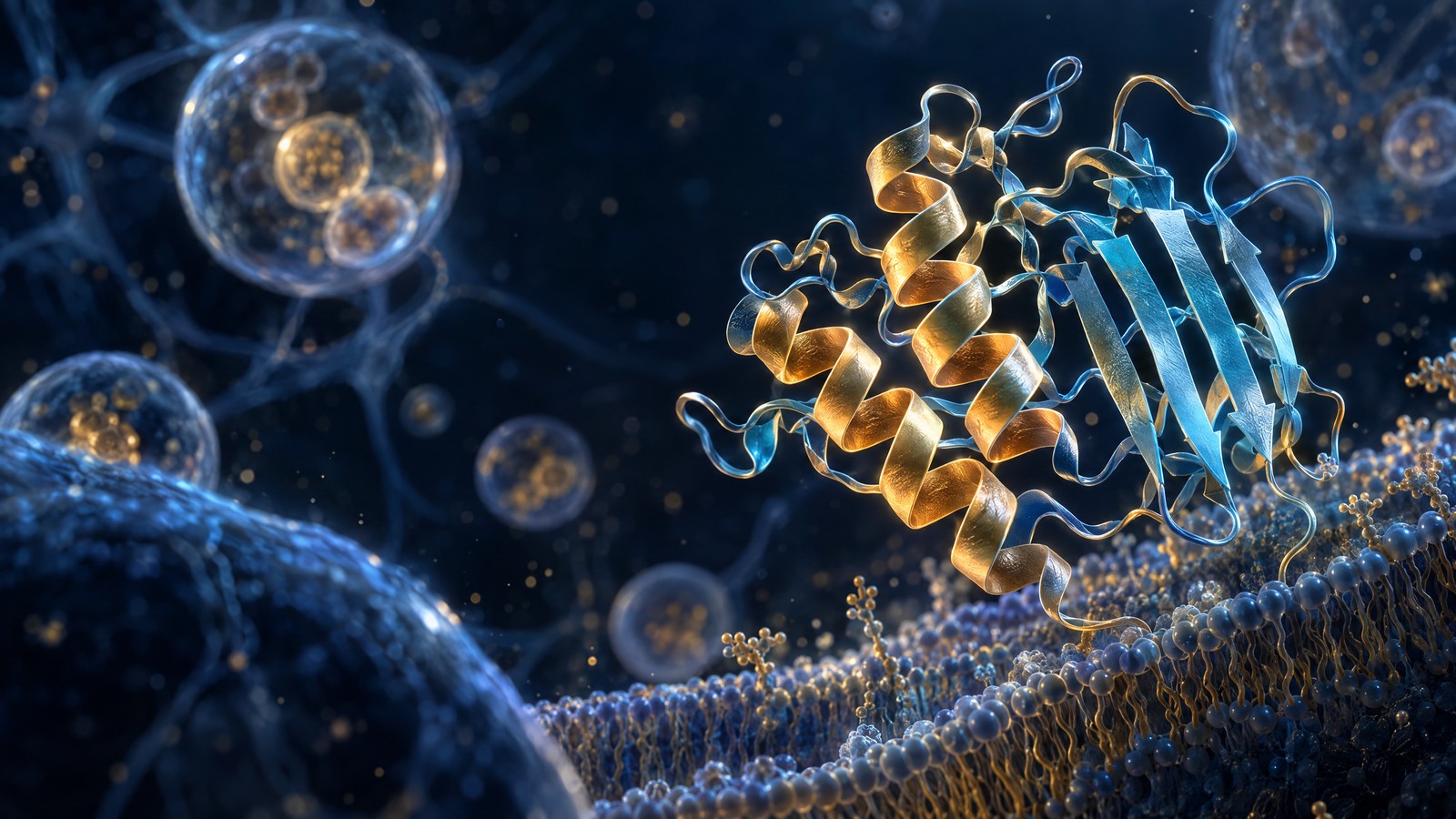
A protein can pass on a harmful shape without becoming a bacterium or a virus. That is the extraordinary biological problem at the centre of prion research: a disease-associated protein assembly can encourage susceptible copies of a normal host protein to adopt an abnormal conformation. The sequence of amino acids is not the whole story. Shape, location and interactions can change what the protein does. [1] [2]
Prion protein homeostasis means maintaining the production, folding, movement and disposal of prion protein within a functioning cellular system. It brings together molecular chaperones, membrane trafficking, the proteasome and autophagy-lysosome pathways. The research-inspired Prion Protein Homeostasis & Cellular Clearance BioPhi Matrix 9-Phase BioPhi Harmonic Proteostasis & Neurodegeneration Research Energetics provides a nine-theme framework for exploring that science through an evolving audio composition. Its value here is scientific interpretation and structured listening, not an established intervention that clears prions or changes human disease. [3] [4]
For a practical starting point, the seven-day app-and-coil guide below explains the connection, placement, daily programme order, timed breaks and simple observations to record. It is a consumer-wellness routine for adults who can safely use the equipment, not a treatment plan for neurological symptoms.
The remarkable distinction: protein identity versus protein shape
Cellular prion protein, usually written PrPC, is a normal host glycoprotein attached to the cell surface through a glycosylphosphatidylinositol, or GPI, anchor. Its structure includes a flexible amino-terminal region and a folded region containing alpha helices. Normal PrP is not simply unwanted material. Researchers continue to investigate its physiological functions, including its interactions with metals and the cellular environment. [1]
Disease-associated prion conformations are commonly described as PrPSc. They are enriched in beta-sheet structure and can form assemblies that seed additional conversion. Protease resistance, infectivity and toxicity are related research questions, but they are not interchangeable properties of every assembly. This is why prion biology cannot be reduced to counting visible clumps or identifying one supposedly harmful frequency. [2]
The distinction offers a more useful lens for neurodegeneration: a protein can be chemically familiar yet structurally and biologically different. However, shared concepts such as aggregation or seeding do not make every neurodegenerative disorder a contagious human prion disease. Human prion disease has its own clinical, genetic and exposure context. [2] [3]

Cells already perform protein quality control
Proteostasis is an active system, not a passive cleanup operation. A newly made protein must fold, reach the appropriate compartment and interact with suitable partners. Chaperones assist folding and help manage unstable proteins. In the endoplasmic reticulum, quality-control systems can route unsuitable protein through endoplasmic-reticulum-associated degradation. The ubiquitin-proteasome system then provides one route for disposing of certain proteins. [5]
Autophagy supplies another form of handling. Cellular material can be enclosed, transported and delivered to lysosomes, where degradation depends on functional enzymes and the appropriate environment. For prion-associated material, the important questions include which assembly is being handled, where it is located, whether it reaches a functioning lysosome and whether degradation is actually completed. [6]
This makes autophagic flux a more informative concept than simply “more autophagy.” Flux concerns the progress of material through the pathway. An accumulation of autophagy-related markers can reflect increased processing, impaired completion or both. Reviews of prion models report differences across disease stage, brain region, species and prion strain. A universal “switch on cellular clearance” explanation misses this biology. [6]
A primary study in mouse-derived neuronal cell lines illustrates one possible bottleneck. Persistent prion infection was associated with altered Rab7 membrane recruitment, impaired lysosomal maturation and slower degradation of a test cargo. The importance of the finding is its specificity: cellular transport and disposal can become disrupted together. It does not establish that the same mechanism explains every human case. [7]
The real signal beneath the marketing: regulate the system, not just the symptom
One important direction in biology is to look beneath an organ-level diagnosis and ask which cellular and signalling processes have lost regulation. In proteostasis, the questions are concrete: can proteins fold correctly, reach the right compartment, avoid harmful assemblies and complete disposal through functioning quality-control pathways? Researchers are investigating ways to influence those processes rather than treating every downstream consequence as an isolated problem. A 2026 review describes this as proteostasis resilience, the capacity of cells and tissues to maintain protein stability under stress. [26]
This is an upstream-regulation thesis, not a claim that medicine has abandoned organ-level treatment. Chaperones, protein trafficking, stress responses and autophagy-lysosome pathways provide real biological targets. Their coordination matters: increasing one marker is not the same as restoring completed cellular processing. The PrP-lowering studies discussed below illustrate a distinct, experimentally tested upstream strategy, reducing the supply of the protein available for conversion. These are research approaches with intervention-specific evidence, not interchangeable ways of switching on the body’s repair systems. [5] [6] [20] [21]
A credible biological thesis does not automatically validate the product built around it. A particular herbal blend marketed around cellular maintenance would still need evidence for its actual formulation, exposure, safety, target engagement and meaningful human outcomes. Promises of future trials are not published results. No specific herbal blend or ingredient inventory has been verified for this programme, and this article does not recommend ingesting one. The same evidence rule applies to a BioPhi composition or coil: its scientific inspiration can be explained clearly while its biological effects remain a separate question to test. [26]
Why substances belong in the scientific discussion
A substance-informed research theme is meaningful when it points to an actual biological relationship. A metal ion can coordinate with a protein. A membrane lipid can affect where a protein travels. A redox molecule can participate in cellular chemistry. Those are concrete questions that make a research narrative more specific than a generic label such as “brain support.” They also require careful separation from an audio representation: naming or sonifying a molecule does not administer it. [8] [9] [16]
The examples below explain public molecular research relevant to prion biology. They are research context, not an inventory of substances confirmed in this programme. No substance-associated signal values or internal derivations are disclosed.
Copper: coordination chemistry, not a simple good-or-bad label
PrP’s amino-terminal octarepeat region can bind copper. A biochemical study of PrP-derived peptide constructs found occupancy-dependent coordination modes and affinities. The protein-metal relationship is therefore sensitive to chemical conditions, rather than one fixed association. The proposal that this region contributes to copper buffering remains a physiological interpretation, not a demonstration that supplementation or removal benefits people with prion disease. [8]
For a research-informed composition, this literature offers a precise theme: protein behaviour depends on its molecular surroundings. That is the constructive reason to discuss a metal-associated reference. It does not justify claiming that sound changes copper binding, corrects a deficiency or performs chelation.
Membrane lipids and cholesterol: the protein’s location matters
PrP moves between the cell surface and intracellular compartments. Cholesterol- and sphingolipid-rich membrane domains, along with endosomal trafficking, influence its localisation and encounters with potential conversion partners. Lipids can also act as cofactors in experimental conversion systems. The effects depend on membrane composition, protein construct, compartment and prion strain. [9]
This is a more revealing story than treating cellular cholesterol as debris. Membrane organisation is part of normal biology. Manipulating membrane cholesterol in cultured cells is not the same as changing a person’s blood cholesterol, diet or medication, and these studies do not supply advice to do so. A lipid-related research theme makes the architecture’s educational reference more specific by asking where the protein is and what it encounters. [9]
Glutathione-related redox biology: balance is more informative than “more”
Glutathione participates in cellular redox systems, including pathways involved in managing lipid peroxides. A 2025 study connected PrP expression, peroxide regulation, membrane-lipid remodelling and susceptibility to ferroptosis, a regulated form of cell death. Its main mechanistic experiments used engineered cells, with additional organoid, mouse and postmortem observations. It was not a treatment trial in living patients. [10]
One particularly useful finding was that lower basal oxidant levels and greater resistance to a later damaging challenge were not the same outcome in those models. This helps explain why homeostasis is about coordinated regulation, not maximising a single antioxidant measure. It establishes neither an audio effect nor a reason to change supplements. [10]
How researchers see protein conversion
Real-time quaking-induced conversion, abbreviated RT-QuIC, is a laboratory assay that uses abnormal seed material to promote conversion of recombinant PrP. Agitation supports the reaction, and thioflavin T fluorescence helps report amyloid-associated reaction products. The procedure amplifies a detectable signal. It is not a way to shake prions out of a person’s brain. [11]
RT-QuIC has become important in clinical investigation, but a result must be interpreted with the person’s history, examination, imaging and other findings. A multicentre clinical cohort documented false-negative results. Sample characteristics, subtype and laboratory conditions can influence performance. A seeding assay is not a home measure of complete disease burden or cellular clearance. [12]
Infrared spectroscopy addresses another question: what structural features are present? In recombinant mouse-PrP experiments, infrared analysis distinguished secondary-structure features in fibrils seeded by different mouse-adapted strains. Some features changed across amplification rounds. Those observations are analytical signatures, not instructions for reversing a conformation in human tissue. [13]
The nine phases: a research narrative through sound
The supplied nine-theme concept moves from normal protein structure toward disease-associated conversion, observation and cellular maintenance. It gives the composition a topic-specific progression. Each phase below names a scientific idea represented in the design, not a proven physiological action.
| Research phase | Scientific question | Value in the listening narrative |
|---|---|---|
| 1. Normal PrP | What is the normal host protein? | Begin with organised structure and cellular context rather than assuming all PrP is harmful. |
| 2. Conformational change | How can structure change biological behaviour? | Introduce change as the central subject of the composition. |
| 3. Seeded conversion | How can an assembly template additional conversion? | Explore interaction and propagation as research concepts. |
| 4. Protein assemblies | How do oligomers and fibrils differ? | Develop the distinction between individual proteins and organised aggregates. |
| 5. Structural spectroscopy | How are conformations characterised? | Connect the narrative with laboratory observation, without publishing measurement-to-audio mappings. |
| 6. RT-QuIC research | How is seeded conversion detected? | Represent assay concepts without reproducing a diagnostic procedure. |
| 7. Neuronal stress | How does disrupted handling interact with neuronal dysfunction? | Place protein behaviour within a cellular environment. |
| 8. Protein quality control | How do folding, transport and disposal cooperate? | Focus on regulated maintenance rather than a generic detox narrative. |
| 9. PrP-lowering research | Could reducing available host PrP alter disease biology? | Conclude with an experimental research direction, not an audio-mediated lowering claim. |
The scientific background for these themes comes from protein structure, conversion, quality-control and assay research. The decision to organise them into a nine-phase composition is programme design. Exact timing, substance mappings, derivations and signal implementation remain unpublished. [1] [2] [5] [11] [13]

What evolving harmonics add to the experience
A fixed tone and an evolving composition are different audio designs. A fixed tone offers a relatively stable spectral component. A designed composition can vary its harmonic content, relative levels, rhythm and transitions over time. This can make a research narrative audible as a progression rather than a single repeating event.
That design belongs to the field of sonification: representing information through sound. NASA Earthdata describes sonification as a tool for listening to patterns and widening access to data. Its example concerns data representation, not treatment. A research measurement can inspire an audible relationship without becoming a molecular intervention. [16]
The appropriate term for a time-frequency image of the composition is spectrogram. Molecular infrared analysis is spectroscopy. Keeping those terms distinct matters. A spectrogram can show changing signal content; it cannot measure PrP conversion, lysosomal flux, infectivity or clinical recovery. The supplied spectral source remains unpublished to protect internal data.
Likewise, an evolving waveform is not proof that a programme avoids cellular adaptation or outperforms a fixed signal medically. The technical distinction can be explained positively through composition, reproducibility and topic-specific organisation without turning an engineering feature into an untested biological claim.
From a laboratory finding to a patient outcome
Prion research is advancing through better models, assays and experimental strategies. It also offers an important lesson about endpoints. Less aggregation in a dish, an altered protease-resistance pattern, reduced seeding and better survival are different findings. Each answers a different question. [2] [11]
Quinacrine and doxycycline illustrate why chemical research needs human testing. The blinded quinacrine trial did not find a significant survival advantage in the tested sporadic-CJD population. A larger randomised doxycycline trial in symptomatic patients also did not establish a survival benefit and stopped for futility. These were actual chemical interventions, not sonified substances. Their results explain why a research reference should not be promoted as an established therapy. [14] [15]
The current frontier: reduce the supply of PrP
PrP-lowering asks a different question: could reducing the availability of the normal protein limit the material available for conversion? A 2020 study of antisense compounds and a 2026 study of divalent siRNA reported benefits in specified experimentally infected mouse models. Outcomes depended on the intervention and conditions. Even mice expressing a human gene remain animal models, not human trial participants. These findings support clinical investigation, not a prediction that people will benefit. [23] [24]
As checked on November 5, 2026, two relevant early human studies are registered. ION717 is an investigational antisense oligonucleotide delivered intrathecally, into cerebrospinal fluid, and designed to reduce production of PrP. PRiSM investigates an intrathecal PrP-targeting siRNA strategy. Both involve actual molecular interventions, not acoustic representations. [20] [21]
| Study | Verified status | Population and evidence |
|---|---|---|
| ION717 / PrProfile NCT06153966 |
Phase 1/2a; active, not recruiting. Registry updated September 18, 2026. | Adults with early-stage probable or definite prion disease. Safety is the primary focus; CSF PrP is a secondary biomarker. No registry summary results are posted. |
| PrP-siRNA / PRiSM NCT07444580 |
Phase 1; recruiting. Registry updated October 16, 2026. | Includes symptomatic adults and presymptomatic adults with highly penetrant disease-causing PRNP variants. Safety and target-related measurements are being studied. No registry summary results are posted. |
“No results posted” describes the registry, not every public observation. Ionis’s September 2026 community statement reported qualitative preliminary safety, tolerability and target engagement, without demonstrated clinical benefit. An October PRiSM community statement also described early safety observations and explicitly stated that human benefit has not been demonstrated. Sponsor and investigator statements are preliminary disclosures, not peer-reviewed efficacy results. [22] [25]
The important distinction is between target engagement and clinical efficacy. Changing a target-related biomarker does not by itself show that a person lives longer or declines more slowly. No marketing approval or peer-reviewed human efficacy result for either candidate was verified in this review. The development is scientifically important precisely because these questions are being tested, rather than assumed. It does not establish PrP lowering through listening to the BioPhi matrix. [20] [21] [22] [25]
Programme menu: choose an experience, not a disease claim
The primary programme for this feature is Prion Protein Homeostasis & Cellular Clearance BioPhi Matrix 9-Phase BioPhi Harmonic Proteostasis & Neurodegeneration Research Energetics. The following real platform choices offer optional companion listening themes. Titles are reproduced as catalogue names; a title does not establish a clinical benefit. In particular, sleep-labelled selections are not treatments for fatal familial insomnia or another prion disease.
- Sleep Energetics
- Insomnia, Falling Sleep Advanced
- Insomnia, Lack of Falling Sleep
- Bb: Sleep Decent, Deep Rain Rest and Relaxation ASMR
- G: Breath Coherence, Bamboo Water Harmonics ASMR
- C: Earth Grounding Lock, Wind Magic Harmonics ASMR
- Muscle Relaxation Energetics
- Nervous System 9-Phase BioPhi Orbital Vagus Reset Energetics
- 11Hz Alpha CalmThinking, Attention, Reduce Stress, Alert Mind
How to use the matrix with an iTorus coil: a seven-day wellness routine
Your practical takeaway is a repeatable routine: one supported coil setup, one comfortable placement, the primary programme first, two short companion listening blocks and a simple daily log. The example below reserves the coil for the primary block and uses ordinary audio for the companions, keeping the hardware exposure simple rather than stacking three coil sessions.
This is an optional adult wellness routine for exploring comfort, body awareness and settling. It is not a prion-disease treatment or a test of cellular clearance. The 10-minute and five-minute windows are editorial choices for organising a short session, not clinically validated doses or verified full-track runtimes. Use them only where your current device instructions permit. If a programme finishes sooner, stop there; do not loop it to fill the timer. A timed excerpt may not include every phase.
Before Day 1: confirm the connection and choose one placement
- Identify the exact model and confirm app compatibility. Open the PEMF Healing / Frequency Healing Platform and the linked primary programme. Confirm with iPyramids that your model and accessories are approved for this third-party playback route. The manufacturer’s current terms require written approval for third-party integration; electrical audio compatibility alone does not establish that approval. If this is not confirmed, use the audio-only version rather than improvise a coil connection. [29]
- For iTorus i2, use the documented audio-cable route. Connect the phone, tablet or computer headphone output to the coil’s auxiliary input through the supplied 3.5 mm cable. If your phone needs an adapter, use one confirmed compatible with your model and phone. Seat the connectors fully. The documented i2 route does not require adding a speaker amplifier. [27]
- For iTorus i5, use its supplied amplifier. The wired route is phone audio output, through a compatible adapter if needed, to the amplifier’s audio input, then the supplied model-specific cable to the coil. Follow the current manual for the amplifier, power supply and keyed connections. Do not substitute a higher-power amplifier or connect a speaker-level output to an i2 input; excess drive can overheat a coil. [28] [31]
- Choose a stable, comfortable position beside the body. Sit in a supportive chair with the coil on a stable adjacent surface, following your model’s placement guidance. The i2 manufacturer describes desk or beside-meditation placement; skin contact is unnecessary. Keep this same position throughout the week. This routine does not target the brain: do not place the coil on the head, face or neck, and do not sleep on it. [27] [28]
- Set up for controlled playback. Select one programme at a time, start from the beginning and turn off automatic repeat or automatic advancement where the player permits. Follow the model-specific source and amplifier instructions. Do not boost output to seek a stronger effect or increase it because you cannot feel the field. Use the manufacturer’s documented function check; sensations are not a measurement of delivered dose. [32]
- Screen for reasons not to use the coil. Do not use this home coil routine with an implanted medical device. Pregnancy, nursing, neurological illness, seizure history or other health concerns require individual professional advice and manufacturer guidance. New or rapidly worsening neurological symptoms belong in medical assessment, not this routine. Keep the coil and any supplied test magnet away from other people with implants. [30] [19] [3]
Run each day in this order
- Before starting: sit comfortably and note your current tension and ease of settling on a 0 to 10 scale. Record the time, placement and device settings so you can repeat them.
- Primary block: play the day’s linked primary programme through the confirmed coil route for up to 10 minutes, or less if the programme or device instructions require. Remain awake and present. Stop for discomfort, headache, dizziness, agitation or unusual device heat.
- Quiet gap: stop playback, switch the coil off according to its instructions and sit quietly for 10 minutes. This is a rest break, not a claimed biological reset.
- Companion 1: with the coil off, listen to the first companion for up to five minutes through ordinary speakers or comfortable low-volume headphones. These companion blocks are audio-only in this example.
- Second quiet gap: pause for 10 minutes with all programme playback stopped.
- Companion 2: listen to the second companion for up to five minutes, again with the coil off. Breathe normally; do not add breath holds or force slow breathing. Stop before falling asleep.
- Finish: stop the player, confirm the coil is off and complete the brief log below. Keep the same time of day, posture, placement and supported output across the week.
The planned session is 40 minutes before logging: 10 minutes of coil-routed primary playback, 10 minutes of companion audio and 20 minutes of quiet breaks. Shorten or omit blocks when the device instructions or comfort require. Do not substitute three coil exposures for this example unless your exact model’s manufacturer has separately confirmed that schedule. The manufacturer advises starting simply rather than immediately stacking sessions. [32]

Days 1 to 7: exactly what to play
The primary matrix always comes first. The companion pair changes to offer a focused muscle-awareness, ordinary-breathing or evening-settling theme. These are catalogue names, not promises of clinical effects. The daily variation also means this is a practical routine, not a controlled test of the primary programme alone.
On a phone, scroll the schedule sideways to see each linked programme and the daily task.
| Day and practical focus | 1. Primary with coil: up to 10 minutes | 2. Companion audio: up to 5 minutes | 3. Companion audio: up to 5 minutes | What to do and record |
|---|---|---|---|---|
| Day 1 Learn the setup |
Prion Protein Homeostasis & Cellular Clearance BioPhi Matrix 9-Phase BioPhi Harmonic Proteostasis & Neurodegeneration Research Energetics | Muscle Relaxation Energetics | G: Breath Coherence, Bamboo Water Harmonics ASMR | Complete the connection checklist. Choose one beside-body placement. Compare tension and settling before and after; note any discomfort. |
| Day 2 Repeat a comfortable routine |
Prion Protein Homeostasis & Cellular Clearance BioPhi Matrix 9-Phase BioPhi Harmonic Proteostasis & Neurodegeneration Research Energetics | G: Breath Coherence, Bamboo Water Harmonics ASMR | Sleep Energetics | Use the same supported output and position. Stay awake for the sleep-labelled companion. Record whether the routine was easy to follow. |
| Day 3 Notice ordinary muscle tension |
Prion Protein Homeostasis & Cellular Clearance BioPhi Matrix 9-Phase BioPhi Harmonic Proteostasis & Neurodegeneration Research Energetics | Muscle Relaxation Energetics | Sleep Energetics | Let the jaw and shoulders rest naturally without stretching into pain. Record comfort rather than assuming a cellular effect. |
| Day 4 Check repeatability |
Prion Protein Homeostasis & Cellular Clearance BioPhi Matrix 9-Phase BioPhi Harmonic Proteostasis & Neurodegeneration Research Energetics | Muscle Relaxation Energetics | G: Breath Coherence, Bamboo Water Harmonics ASMR | Repeat the Day 1 pair. Note sleep, caffeine, stress or medication changes that might explain a different experience. Do not alter prescribed medication. |
| Day 5 Protect a quiet evening |
Prion Protein Homeostasis & Cellular Clearance BioPhi Matrix 9-Phase BioPhi Harmonic Proteostasis & Neurodegeneration Research Energetics | G: Breath Coherence, Bamboo Water Harmonics ASMR | Sleep Energetics | Finish before bedtime rather than running the coil overnight. The next morning, note your ordinary sleep impression without treating it as a disease marker. |
| Day 6 Keep the session manageable |
Prion Protein Homeostasis & Cellular Clearance BioPhi Matrix 9-Phase BioPhi Harmonic Proteostasis & Neurodegeneration Research Energetics | Muscle Relaxation Energetics | Sleep Energetics | Repeat Day 3 without adding intensity or extra tracks. Shorten or skip if earlier sessions were unpleasant. Record actual minutes used. |
| Day 7 Review what was useful |
Prion Protein Homeostasis & Cellular Clearance BioPhi Matrix 9-Phase BioPhi Harmonic Proteostasis & Neurodegeneration Research Energetics | Muscle Relaxation Energetics | G: Breath Coherence, Bamboo Water Harmonics ASMR | Repeat the Day 1 pair only if comfortable. Review all seven entries: ease of use, comfort, settling and any adverse responses. Decide whether the routine earns a place in ordinary life. |
Between every playback block, take the 10-minute quiet gap described above. The coil stays off for both companion blocks. The programme name links open the exact selection; the timing columns describe your optional session windows, not the native track lengths.
Day 8 is a no-session observation day. Review the log, then take a full seven-day pause before considering another week. There is no need to repeat, and the pause is a practical rest choice, not a scientifically established washout for prion biology.
A log you can actually use
| Record | Example entry |
|---|---|
| Date, time and setup | Day 1; same chair and beside-body placement; i2 with confirmed cable/adapter; supported output setting recorded. |
| What you actually played | Primary 10 minutes; Muscle Relaxation Energetics 5 minutes; G: Breath Coherence, Bamboo Water Harmonics ASMR 5 minutes; two 10-minute quiet gaps. |
| Before and after | Tension 6 to 4; ease of settling 3 to 5. These are subjective ratings, not laboratory measurements. |
| Comfort and context | No discomfort; stressful workday; more caffeine than usual. Note shortening, missed blocks or unexpected symptoms honestly. |
| Next morning, if relevant | Ordinary sleep impression and whether the routine felt worth repeating. Do not infer PrP reduction or restored autophagic flux. |
What can you take away? A well-kept log can tell you whether this routine is comfortable, practical and subjectively useful for settling. It cannot tell you whether a protein has been cleared, a disease has changed or the coil caused an observed difference. For a reader, that distinction turns a vague promise into a usable decision: keep a comfortable routine that adds value, or stop one that does not.
Audio, haptics and PEMF: three different delivery questions
Wired stereo headphones preserve separate left and right acoustic channels for compatible binaural material. Bone-conduction listening remains an auditory route; it is not a way to administer a molecule. A haptic transducer creates mechanical vibration. A driven coil creates an electromagnetic exposure that depends on the device and its operating conditions. These routes should be described separately rather than added together as if their combined effectiveness were established.
A systematic review of controlled human EEG studies found inconsistent evidence of binaural-beat entrainment in neurologically healthy, normal-hearing adults. It does not establish prion-specific benefit or a guaranteed brain-state change. In the seven-day routine above, the primary block uses a confirmed coil connection; the companions use ordinary audio with the coil off. Keeping those routes separate makes the schedule clearer and avoids treating multiple modalities as interchangeable doses. [18]
| Question | Research-inspired audio | Molecular or clinical research |
|---|---|---|
| What is delivered? | Sound, or a device-specific physical output when routed through compatible hardware. | An actual biological intervention with defined exposure. |
| What can be recorded at home? | Listening comfort, preference and subjective attention. | Clinical outcomes require appropriate tests and professional interpretation. |
| What does a substance reference mean? | A research theme or representation, not the substance’s atoms or pharmacological dose. | Actual chemical properties and tissue exposure matter. |
| What makes the nine-phase design distinctive? | A topic-specific progression through structure, conversion, observation and maintenance. | Clinical effectiveness must be established by studies of the exact intervention. |
Platform and device resources
Affiliate disclosure: Some resource links are affiliate links. A purchase may support PEMF Magazine without changing the evidence presented. Hardware is optional, and these consumer resources are not established prion treatments.
| Resource | Practical role | Boundary |
|---|---|---|
| Frequency Healing App | Access the platform and choose compatible listening content. | Programme access is not clinical diagnosis or treatment. |
| iTorus i2 or iTorus i5 | Confirmed compatible coil route for the primary block of the seven-day routine; the companions stay audio-only. | Follow exact connection, placement and output instructions. No brain or head placement protocol is prescribed here. |
| Woojer Vest 4; use code EPEMF10 | Optional compatible vibrotactile playback. | Mechanical experience is not evidence of neuronal repair or protein clearance. |
| Metatronic iMPrinter | Optional personal ritual, separate from the listening orientation. | No established effect on PrP, infectivity, water chemistry or clinical outcomes is claimed. |
Best practices: keep the experience simple and the clinical care intact
Use a quiet environment, comfortable low volume and breaks. Do not increase output to pursue a stronger biological effect. Avoid listening while driving or doing tasks requiring attention. Stop for headache, dizziness, agitation, ear discomfort or an unpleasant sensory response. WHO guidance emphasises that hearing risk depends on sound level, duration and repeated exposure. [17]
If you use an imprinter as a personal ritual, follow its electrical and handling instructions, keep liquids away from electronics and use an ordinary clean container if appropriate. Do not add chemicals, change medication, impose fasting or use a ritual as a prion-decontamination method. There is no basis here for claiming that a drink receives a compound’s pharmacology or a prion-clearing property.
Implanted electronic devices, pregnancy, seizure history and neurological illness require individual professional and manufacturer guidance before adding external stimulation. FDA guidance documents magnetic interference with some implants; its consumer-electronics advice is not a universal safety distance for every coil. Do not place external devices over an implant or assume a multi-device combination is safe. [19]
Rapid neurological change belongs in clinical care
Human prion disease can be sporadic, inherited or acquired through specific exposures. It is not generally transmitted by ordinary touching or social contact. Rapidly worsening confusion, coordination, vision, behaviour or swallowing should prompt medical assessment, not an app experiment. Similar symptoms can arise from conditions that require different and sometimes treatable care. Sudden or severe neurological change warrants emergency assessment. [3] [4]
Current care for CJD is supportive and symptom-focused; no specific therapy has been established to stop its progression. A research-inspired listening experience can coexist with ordinary life and clinical support, but it cannot replace neurological investigation, medicines, mobility assistance, swallowing support or caregiver guidance. [3] [4]
The useful shift in perspective is from a single “prion frequency” to the biology of a whole protein-maintenance system. The nine-phase concept makes room for shape, location, interaction, measurement and research. That is a richer scientific narrative, and it can be explained without exposing internal signal data or promising a biological outcome that has not been demonstrated.
Educational and wellness disclaimer: This article provides scientific education and an optional wellness routine, not individual medical advice, diagnosis or treatment. It does not establish that any app, coil, haptic device, sound composition or imprinter changes prion biology. Do not delay licensed care or change medication or supplements on this basis. Follow device instructions and obtain appropriate professional advice for medical conditions and compatibility questions.
Related Articles
- 40 Hz Alzheimer’s Research: Evidence and a Daily App Guide
- The Light Eye: Polarity, Perception and Frequency Explained
References
- Pravas K Baral, Jiang Yin, Adriano Aguzzi, et al. (2019). Transition of the prion protein from a structured cellular form (PrPC) to the infectious scrapie agent (PrPSc). Protein Science : A Publication of the Protein Society. Direct source.
- Christina J Sigurdson, Jason C Bartz, Markus Glatzel. (2018). Cellular and Molecular Mechanisms of Prion Disease. Annual review of pathology. Direct source.
- Centers for Disease Control and Prevention. Clinical overview of Creutzfeldt-Jakob disease. Clinical guidance.
- National Institute of Neurological Disorders and Stroke. Creutzfeldt-Jakob disease. Clinical and caregiver information.
- Tatyana Dubnikov, Tziona Ben-Gedalya, Ehud Cohen. (2017). Protein Quality Control in Health and Disease. Cold Spring Harbor Perspectives in Biology. Direct source.
- Óscar López-Pérez, Juan José Badiola, Rosa Bolea, et al. (2020). An Update on Autophagy in Prion Diseases. Frontiers in Bioengineering and Biotechnology. Direct source.
- Shim, Su Yeon, Karri, Srinivasarao, Law, Sampson, et al. Prion infection impairs lysosomal degradation capacity by interfering with rab7 membrane attachment in neuronal cells. Scientific Reports. Direct source.
- Walter ED, Chattopadhyay M, Millhauser GL. (2006). The Affinity of Copper Binding to the Prion Protein Octarepeat Domain: Evidence for Negative Cooperativity. Biochemistry. Original study.
- Alves Conceição C, Assis de Lemos G, Barros CA, Vieira TCRG. (2023). What is the role of lipids in prion conversion and disease? Frontiers in Molecular Neuroscience. Open review.
- Peng H, Pfeiffer S, Varynskyi B, et al. (2025). Prion-induced ferroptosis is facilitated by RAC3. Nature Communications. Original study.
- Ryuichiro Atarashi, Kazunori Sano, Katsuya Satoh, et al. (2011). Real-time quaking-induced conversion: A highly sensitive assay for prion detection. Prion. Direct source.
- Samuel M Jones, Evelyn B Lazar, Amanda L Porter, et al. (2023). Real-Time Quaking-Induced Conversion Assays for Prions: Applying a Sensitive but Imperfect Test in Clinical Practice. European journal of neurology. Direct source.
- Kazunori Sano, Ryuichiro Atarashi, Daisuke Ishibashi, et al. (2014). Conformational Properties of Prion Strains Can Be Transmitted to Recombinant Prion Protein Fibrils in Real-Time Quaking-Induced Conversion. Journal of Virology. Direct source.
- Geschwind MD, Kuo AL, Wong KS, et al. (2013). Quinacrine treatment trial for sporadic Creutzfeldt-Jakob disease. Neurology. Original trial.
- Haïk S, Marcon G, Mallet A, et al. (2014). Doxycycline in Creutzfeldt-Jakob disease: a phase 2, randomised, double-blind, placebo-controlled trial. The Lancet Neurology. Indexed primary-study abstract.
- NASA Earthdata. From Data to Melody: Data Sonification and Its Role in Open Science. Institutional explanation.
- World Health Organization. Deafness and hearing loss: safe listening. Listening safety guidance.
- Ruth Maria Ingendoh, Ella S Posny, Angela Heine. (2023). Binaural beats to entrain the brain? A systematic review of the effects of binaural beat stimulation on brain oscillatory activity, and the implications for psychological research and intervention. PLOS ONE. Direct source.
- U.S. Food and Drug Administration. Magnets in cell phones and smart watches may affect pacemakers and other implanted medical devices. Device-safety guidance.
- ClinicalTrials.gov. ION717 / PrProfile, NCT06153966. Updated September 18, 2026; checked November 5, 2026. Current registry record.
- ClinicalTrials.gov. PrP-targeting siRNA Safety & Mechanism Study (PRiSM), NCT07444580. Updated October 16, 2026; checked November 5, 2026. Current registry record.
- Ionis Pharmaceuticals. September 2026 PrProfile community statement. Sponsor disclosure, not a peer-reviewed trial report. Original community statement.
- Minikel EV, Zhao HT, Le J, et al. (2020). Prion protein lowering is a disease-modifying therapy across prion disease stages, strains and endpoints. Nucleic Acids Research. Primary mouse-model study. Original study.
- Gentile JE, Corridon TL, Serack FE, et al. (2026). Divalent siRNA for prion disease. Nucleic Acids Research. Primary mouse-model study. Original study.
- PRiSM / NN112 community statement. October 14, 2026. Preliminary investigator disclosure, not a peer-reviewed efficacy result. Original community statement.
- Borlepawar A, Neu M, Ma Z, et al. (2026). Emerging perspectives in proteostasis: bridging mechanisms and therapeutics for human diseases. Signal Transduction and Targeted Therapy 11, 224. Open review.
- iPyramids. C60 Shungite iTorus i2 product information and official setup tutorial. Manufacturer specifications and placement examples, not efficacy evidence. Product information; Official setup tutorial.
- iPyramids. Aqua Superluminal iTorus i5 product information and official setup tutorial. Actual supplied hardware and its current manual govern. Product information; Official setup tutorial.
- iPyramids. Terms of service, including third-party integration and device-use requirements. Current terms.
- iPyramids. Medical disclaimer and use exclusions. Manufacturer safety guidance.
- iPyramids. iTorus amplifier product information and excess-power overheating warning. Model-specific amplifier resource.
- iPyramids. Frequently asked questions: device checks, placement, starting simply and session-stacking cautions. Manufacturer FAQ.
Explore PEMFHealing.app
Your companion for structured frequency programs and progress tracking.
Why full spectrum frequencies can feel stronger than a single tone
- Broader coverage across biological windows, not a narrow peak.
- Harmonics and sidebands can support entrainment and coherence.
- People vary by tissue state and time of day, so spectrum raises the chance of a match.
- Lower adaptation risk compared to repeating a single tone for long periods.
Dual channel vs single channel
- Two independent channels can run complementary programs at once.
- Phase and field options may create a smoother perceived field.
- Target local and systemic aims together, for example focus plus relaxation.
Why we use multi modality, not only Rife
Complex systems benefit from more than one input. We layer modalities to address different pathways and timescales.
- WBV for circulation and lymph support
- VibroAcoustics for relaxation and coherence
- Pro Rife and Ultra Rife targeted frequency sets
- ElectroHerbalism mild field patterns with botanicals
- NeuroCeptors gentle neuromodulation for calm and focus
- Biophotonics light based cellular signaling support
- Scalar field coupling for subtle energy work
- Plus PEMF, photobiomodulation, breathwork, HRV awareness, and more
Our ecosystem
-
Imprinter imprint supportive signatures into water, supplements, crystals, or pendants.
Metatronic Flower of Life Dual Frequency Imprinter -
iTorus i2 portable PEMF coil for on the go sessions.
iTorus i2 -
iTorus i5 higher output portable PEMF.
iTorus i5
Disclosure: Some links may be affiliate. If you purchase, we may receive a small commission at no extra cost to you.
Disclaimer: This content is for informational purposes only and is not medical advice. Always consult a qualified healthcare professional before starting any new therapy or using frequency based devices.
Related articles
- FDA-Authorized Shockwave Therapy for Diabetic Foot Ulcers
- FDA-Authorized Devices for ADHD, Tremor, Stroke & Sleep Apnea
- Pineal Gland Activation: 3-Minute Practice and Fluoride Facts
- 11/11/2026 Numerology: The Hidden 5 Behind the Portal
- Hypogeum of Malta: Ancient Acoustics, Modern Meditation
- Open to Receive: 432 Hz BioPhi Meditation and the Art of Receiving