
Histotripsy: FDA-Authorized Liver Tumor Ablation Explained
Histotripsy explained | Evidence reviewed through November 21, 2026
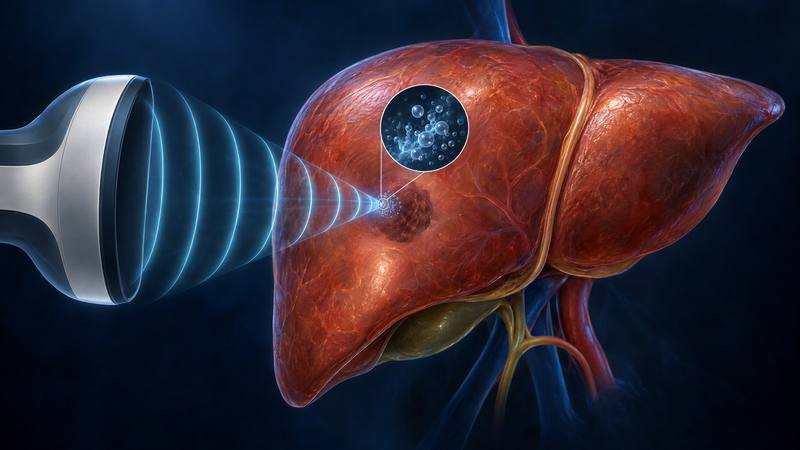
Sound waves really can mechanically destroy a liver tumor without an incision or heat-based ablation. The important part is not a mysterious frequency. It is a carefully engineered, image-guided ultrasound system that concentrates short acoustic pulses into a physician-planned treatment volume. That technology is called histotripsy. [1] [2]
The short answer: The U.S. FDA authorized the HistoSonics Edison System for noninvasive destruction of liver tumors in October 2023. Its pivotal study demonstrated immediate technical success in 42 of 44 evaluable tumors. Kidney use was still investigational in the reviewed public records after a May 2026 submission announcement. Pancreatic treatment has entered early human investigation. None of those milestones establishes a universal cancer cure or makes a consumer audio or PEMF programme equivalent to histotripsy. [1] [3] [4] [5] [6]
This guide follows the complete story: what the bubbles do, what the four frequently quoted ultrasound frequencies mean, what the FDA actually authorized, how the liver studies performed, where kidney and pancreatic research stand, and why the immune-response question deserves serious attention. It also provides exact PEMF Healing catalogue links and a practical three-day listening routine for comfort and reflection alongside, not instead of, oncology care.
In this guide: FDA authorization · Cavitation and frequencies · Clinical results · Kidney development · Pancreatic trials · Discovery and investment · Immune research · Programme links · Three-day practices
What the FDA authorized for liver tumors
The original FDA decision was granted on October 6, 2023, under De Novo number DEN220087. October 9 was the company announcement date, not the regulatory decision date. The device is a prescription Class II focused-ultrasound system for nonthermal, mechanical tissue ablation. [1] [7]
“The Edison System is indicated for the non-invasive destruction of liver tumors, including unresectable liver tumors, using a non-thermal, mechanical process of focused ultrasound.” [1]
That is an important authorization. It gives specialists a different way to destroy a planned volume of liver-tumor tissue. The evidence included hepatocellular carcinoma, the most common primary liver cancer, and tumors that had spread to the liver from other organs. Treating a pancreatic-cancer metastasis in the liver is not the same anatomical indication as treating the primary tumor in the pancreas. [8] [3]
The FDA review also explicitly states that safety and effectiveness for cancer treatment had not been established. Its pivotal evidence was designed around local tissue destruction and short-term safety, not proof of cure, a five-year survival benefit, or whole-body cancer control. This distinction does not erase the achievement. It defines the achievement accurately. [8]
Subsequent Edison clearances, K233466 on March 13, 2024 and K241902 on October 30, 2024, retained the liver-tumor indication in the reviewed FDA summaries. FDA authorization belongs to a specific device and intended use, not to a number of hertz in isolation. [2] [9]
How histotripsy works: tissue breakdown by cavitation
Histotripsy uses focused acoustic energy. During a short, high-amplitude ultrasound pulse, the negative-pressure portion can initiate a localized cloud of cavitation bubbles. Their rapid expansion and collapse impose mechanical stresses on tissue. Repeated controlled pulses fractionate cellular structures into a tissue lysate rather than relying on sustained thermal coagulation. [2] [10] [11]
The description “liquefies the tumor” refers to this mechanical breakdown into cellular debris. The disrupted material is gradually absorbed over the ensuing months; it is not removed through a surgical incision. A visible treatment zone on early imaging still needs clinical interpretation and follow-up. [12] [3]
The system combines a therapy transducer, acoustic coupling, image guidance, treatment planning, and controlled delivery. The care team must be able to see the target and the bubble cloud and maintain a usable acoustic path. Bone, air and bowel gas can obstruct transmission. A lesion visible on diagnostic ultrasound does not automatically have a safe therapeutic window. [13] [14]
“Targets only the tumor” is too absolute. The target is a planned treatment volume, often including a margin around the lesion. In the pivotal liver study, the mean tumor diameter was 1.5 cm, while the mean treatment-zone diameter was 3.6 cm. The technology aims to confine tissue destruction and spare surrounding structures, but it is not a molecular detector that recognizes every cancer cell while leaving every normal cell untouched. Off-target effects and vascular injuries have been reported. [3] [15]

“No cuts. No heat. No radiation.” What is accurate?
The defensible wording is without an incision, heat-based ablation, or ionizing radiation as the treatment mechanism. Histotripsy is externally delivered and does not require an ablation needle to enter the tumor. Patients still commonly receive general anesthesia and intravenous access; CT may be used for evaluation or follow-up. [1] [16]
“Nonthermal” describes the intended mechanism, not a guarantee of zero temperature rise. The current manufacturer guide warns that localized heating and thermal injury can occur, particularly when acoustic delivery is obstructed or safety limits are exceeded. The related technique called boiling histotripsy uses a different pulse regime involving heating-generated boiling bubbles and should not be casually merged with the Edison cavitation approach. [13] [11]
Thermal high-intensity focused ultrasound, or HIFU, deliberately heats and coagulates tissue. Cavitation histotripsy predominantly disrupts it mechanically. Both use ultrasound; their carrier-frequency ranges can overlap. The distinction is therefore the complete exposure, not simply whether one system uses a higher frequency. [11]
The four ultrasound frequencies: 500 kHz, 700 kHz, 1 MHz and 1.5 MHz
All four values are ultrasonic. 700 kHz means 700,000 acoustic oscillations per second, not an audible 700 Hz tone. The published HOPE4LIVER clinical-system description specifies a 700 kHz therapy carrier and pulses shorter than 20 microseconds. The other values below are verified research configurations, not separate FDA-authorized cancer treatments. [3] [10] [17]
| Frequency | Where it was verified | What the evidence supports |
|---|---|---|
| 500 kHz 500,000 Hz |
A custom laboratory transducer in a 2015 cavitation-threshold study using water, agarose and excised bovine tissue. | Engineering evidence about bubble initiation in specified materials, not a human cancer-treatment outcome. [10] |
| 700 kHz 700,000 Hz |
The system description in the human HOPE4LIVER pivotal publication; also a separate porcine-liver prototype study. | The key published clinical carrier in this evidence set. Prototype settings should not be treated as specifications for every current Edison configuration. [3] [18] |
| 1 MHz 1,000,000 Hz |
A custom transducer in a 2022 rat liver-tumor experiment. | Preclinical evidence on partial ablation and subsequent tumor behavior in that model, not a human recommendation. [17] |
| 1.5 MHz 1,500,000 Hz |
A separate custom array in the 2015 laboratory threshold study. | Histotripsy cavitation can be studied at this carrier, but the number itself is not a treatment approval. [10] |
Four parameters that are often confused describe different things. Carrier frequency describes oscillations within an acoustic pulse. Pulse duration describes how long that pulse lasts. Pulse repetition frequency describes how often pulses are repeated. Peak pressure describes acoustic amplitude, commonly expressed in megapascals in this research. Focusing, coupling, waveform and cumulative exposure also matter. [11] [10]
A tone, a magnetic field and an ultrasound wave can each have a frequency, but they transport energy differently. Matching a numerical rate does not reproduce the focused acoustic pressure or cavitation cloud. That is why no “equivalent histotripsy frequency” should be presented as a home listening or coil setting. [2] [19]
What the human liver studies actually found
HOPE4LIVER: promising technical success, defined precisely
The pooled pivotal report included 44 patients and 49 treated tumors. Immediate imaging was suitable for the primary efficacy analysis in 44 tumors. Technical success was achieved in 42 of those 44 tumors, reported as 95%, within 36 hours. Five treated tumors were not assessable because of imaging limitations. This was a single-arm study using predefined performance benchmarks, not a randomized comparison against surgery or another ablation method. [3]
The result demonstrates that the system could cover the intended target in a high proportion of evaluable, selected tumors. At 30 days, a different measure, technique efficacy based on absence of suspicious residual enhancement, was 30 of 36 assessable lesions, or 83%. The two percentages answer different questions. [3]
Three of 44 patients, reported as 7%, experienced procedure-related grade 3 or higher complications within 30 days: sepsis, pleuritic pain requiring admission, and hepatic failure. The patient with hepatic failure died on day 37. The study met its prespecified safety benchmark, but “no serious complications” would misrepresent it. [3]
The one-year update needs both imaging estimates
The expanded follow-up cohort comprised 47 patients with 52 treated tumors. At one year, estimated freedom from local tumor progression was 63.4% using the original image interpretation and 90.0% after a post hoc rereading. The rereading addressed the possibility that preserved vessels within a treatment zone had been mistaken for viable tumor. That imaging issue is scientifically meaningful, but the revised interpretation was not prospectively validated. [20]
These are Kaplan–Meier estimates incorporating follow-up and censoring, not simple cure fractions of all enrolled patients. One-year overall survival was 58.6% in this heterogeneous cohort. Many patients had other liver lesions or extrahepatic disease and received additional therapies, so the study cannot isolate a histotripsy-specific survival advantage. [20]
Later clinical experience: local results and recovery in larger populations
| Evidence | Observed result | Interpretation |
|---|---|---|
| International commercial safety cohort | Safety data were available for 230 patients: 12 complications, 5.2%, including 3 major complications, 1.3%. | The broader report enumerated 295 patients, but 230 is the correct safety denominator. Retrospective reporting and incomplete coverage limit inference. [21] |
| Selected four-center local-control cohort | 86 of 91 tumors were nonviable at 30 days. At 90 days, primary efficacy was 80 of 85 tumors, with 82 of 85 after retreatment. | Encouraging short-term local response in 47 selected patients; 81% continued systemic therapy. Not a randomized test of survival or cure. [22] |
| Prospective Hong Kong cohort | 57 of 60 tumors had immediate technical success. One-month efficacy was 47 of those 57 initially successful targets, 82.5%. | Thirty selected patients, all with Child–Pugh A liver function. The one-month denominator is conditional on initial success. [23] |
| National U.S. electronic-health-record cohort | 859 of 972 patients, 88.4%, went home the same day; 897, 92.3%, were discharged by the following day. | Strong evidence that short stays are common in practice. Discharge is not complete recovery or proof of disease control. [24] |
The national cohort also recorded 108 deaths among 972 patients within 30 days, 11.1%, from all causes. This is not a device-attributable mortality rate. The database lacked enough information about staging, treatment intent and prior therapy to determine causation. The authors raised important patient-selection questions, especially in advanced disease. Acute kidney injury was recorded in 9 of 742 evaluable patients, 1.2%. [24]
A separate four-center vascular-injury series reported serious hemorrhage or pseudoaneurysm in 4 of 139 treated patients, with three requiring embolization and one death. This does not define the universal complication rate, but it directly challenges an absolute promise that blood vessels can never be injured. [15]
The practical conclusion is substantial: histotripsy can deliver incision-free local tissue destruction and frequently short hospitalization, while careful selection, imaging interpretation and follow-up remain essential. Five-year HOPE4LIVER follow-up is planned in the registry; a planned follow-up period is not a published five-year outcome. [3] [24] [25]
Who may be eligible, and what recovery looks like
A specialist team evaluates tumor location and burden, the acoustic window, functional liver reserve, nearby structures, general health and the oncology goal. The pivotal trial studied up to three tumors smaller than 3 cm. Hospital guidance sometimes describes a practical profile of three or fewer tumors under 4 cm, but neither size alone nor the word “unresectable” guarantees eligibility. Current labeling cautions against treatment in decompensated cirrhosis or Child–Pugh C disease. [3] [12] [16] [13]
Patients usually receive general anesthesia so movement and breathing can be managed precisely. Johns Hopkins describes 10–90 minutes of active treatment and approximately 1.5–2 hours overall in its workflow. The pivotal study reported a mean 34 minutes of active treatment per tumor and a mean total procedure time of 221 minutes. Preparation and observation make the full visit longer than the acoustic exposure. [16] [3]
Many patients leave the same day; others need overnight or longer observation. A ride home and adherence to post-anesthesia instructions are part of planning. Mild abdominal discomfort, fever and fatigue can occur. The treating team sets activity limits and the schedule for contrast imaging, liver and kidney blood tests, and reassessment. Rapid discharge is a useful recovery advantage, not permission to skip surveillance. [12] [16] [14]
Useful questions for a consultation are: Can the target and bubble cloud be visualized safely? What treatment volume and margin are planned? Is the goal local control, palliation or part of a larger treatment strategy? How much healthy liver reserve remains? What imaging and laboratory follow-up will be required? How will existing systemic therapy fit around the procedure? [13] [14]
Kidney tumors: a 67-person trial and a submission, not yet a verified authorization
HOPE4KIDNEY, NCT05820087, is a prospective, multicenter, single-arm pivotal device study. The registry lists 67 actual participants, an actual start of January 4, 2024, and primary completion on September 4, 2025. It remained active but not recruiting in the reviewed record, with longer follow-up planned. Enrollment is not a tally of successfully treated or cured patients. [4]
HistoSonics announced on May 11, 2026 that it had submitted a De Novo request seeking authorization for kidney-tumor destruction. The announcement confirms submission by that date, not an independently documented FDA receipt date or a granted indication. The company explicitly described kidney use as investigational. [5]
The registered primary efficacy measure is elimination of the target after one session on contrast CT or MRI at 90 days. The primary safety measure is freedom from procedure-related Clavien–Dindo grade 3 or higher complications through 30 days. No numerical pivotal outcomes were posted in the registry or verified as published by the research cutoff. Liver success rates should not be substituted for kidney results. [4] [26]
Eligibility was narrow: adults at least 22 years old with one nonmetastatic solid renal mass no larger than 3 cm, adequate kidney function, a suitable acoustic window and anesthesia tolerance. The protocol excluded, among other conditions, a solitary functioning kidney, bilateral tumors, dialysis or acute renal failure, and unsafe overlap with critical structures. It therefore cannot establish safety for every renal tumor or vulnerable kidney. [4]
The reviewed FDA records did not verify a kidney marketing authorization. November 17 reporting attributed an anticipated decision in the first quarter of 2027 to a company-connected investigator. That is a forecast, not an FDA commitment. “Kidney tumors could be next” is reasonable; “the FDA already approved kidney histotripsy in May” is not supported by the filing announcement. [27] [26] [5]
Pancreatic cancer: human research has begun, but trial types matter
GANNON, NCT06282809, is an exploratory, single-arm, open-label study of Edison histotripsy for pancreatic adenocarcinoma. Its current reviewed registry lists recruiting and 50 estimated participants, an increase from the earlier 30-person announcement. Its primary endpoint concerns procedure-related complications within 30 days, with estimated primary completion in March 2028. Those are planned enrollment and completion figures, not finished outcomes. [6]
A second study, histo-pancreas, NCT07873606, sponsored by the University of Hong Kong, lists recruiting and 25 estimated participants in its November 18, 2026 update. It examines safety and serial tumor-size changes. Neither registry had posted results at the research cutoff. [28]
There is also a larger pancreatic focused-ultrasound study, SonoPANIII, NCT07325214, planning 360 participants and comparing IMD10 plus FOLFIRINOX with chemotherapy alone. But its device is described as non-tissue-destructive focused ultrasound. It is not Edison histotripsy. Calling every pancreatic ultrasound trial a large histotripsy trial collapses distinct technologies and can mislead readers about the evidence. [29]
Pancreatic histotripsy is no longer an animal-only idea. A November 17, 2026 case report described a heavily pretreated 49-year-old man with locally advanced pancreatic ductal adenocarcinoma who underwent histotripsy in March 2025. The authors reported discharge within hours and encouraging local imaging control through their reported 16-month follow-up. He subsequently received FOLFOX and then NALIRIFOX. One case with further chemotherapy cannot separate the contribution of histotripsy or establish a survival benefit; it is also not a GANNON trial result. [30]
The pancreas presents a difficult acoustic and anatomical problem. Bowel gas can obstruct access; nearby stomach, duodenum, ducts and major vessels constrain treatment. GANNON requires separation from gastrointestinal structures. Healthy-pig feasibility and safety studies documented visualization failures, off-target bowel injury and possible pancreatitis in some experimental conditions. These findings explain why safe access and bubble-cloud containment matter, rather than providing a human complication rate. [6] [31] [32]
What “13% survive five years” actually means
The American Cancer Society reports 13% five-year relative survival for U.S. pancreatic cancer diagnosed in 2015–2021, all SEER summary stages combined. The newer-period NCI SEER page reports 13.7% for 2016–2022. Relative survival compares survival among people with cancer with expected survival in the general population. It is not simply the fraction alive after five years without adjustment. [33] [34]
Stage strongly changes the population estimate. In the current SEER period, five-year relative survival is 43.6% for localized disease, 17.0% for regional disease and 3.4% for distant disease. These summary stages are not interchangeable with every numbered clinical stage. Group statistics do not predict an individual outcome, and none of these figures measures the effect of histotripsy. [34] [33]

The Michigan discovery: 2001 was the beginning of Xu’s role, not the pig-heart breakthrough
The early story starts with a problem outside oncology: creating an opening in heart tissue for certain severe congenital conditions. Zhen Xu joined Charles Cain’s University of Michigan research team in 2001. Michigan’s institutional histories place the memorable excised pig-heart observation in 2002, when focused pulses produced tissue debris and a hole in the sample. This was laboratory tissue work, not a cancer treatment in a living pig. [35] [36] [37]
The foundational paper, Controlled Ultrasound Tissue Erosion, appeared in June 2004. It analyzed 232 perforations in 40 harvested porcine atrial-wall samples. Its authors were Xu, Achiau Ludomirsky, Lucy Y. Eun, Timothy L. Hall, Binh C. Tran, J. Brian Fowlkes and Cain. The research was a multidisciplinary team achievement, not a lone-inventor account. The investigators’ later review credits Cain with coining “histotripsy” in 2004. [37] [11]
Subsequent work investigated bubble activity and monitoring in 2005 and bulk-tissue homogenization in 2006. Those studies developed the control and physical understanding needed for eventual translation. They did not establish an early cancer cure. The path from a tissue-tank observation to a regulated clinical system took years of engineering and clinical research. [38] [39] [3]
The acquisition and financing timeline, with the numbers kept separate
| Date | Verified milestone | Important distinction |
|---|---|---|
| August 15, 2024 | HistoSonics announced completion of a $102 million Series D financing. | A financing round, not the later majority-stake acquisition. [40] |
| August 7, 2025 | A management-led consortium announced a majority-stake acquisition at an approximately $2.25 billion company valuation. | The consortium included Bezos Expeditions, K5 Global and Wellington Management. It was not a disclosed sole personal purchase by Jeff Bezos or an Amazon acquisition. [41] |
| August 2025 | A later Mike Blue biography places closing of the majority investment in this month. | The exact closing day was not verified; announcement and closing should not be assigned the same date automatically. [42] |
| October 16, 2025 | The company announced closing of a separate $250 million growth financing. | New financing following the majority acquisition, not the $2.25 billion valuation paid again. [43] |
| June 22, 2026 | A later financing announcement stated a $3.75 billion company valuation and participation from Yosemite and other investors. | The $2.25 billion figure is historical, not the latest announced valuation in this research. [44] |
The original acquisition disclosure does not give Bezos’s individual contribution, exact acquired percentage, or cash consideration. A company valuation is not the same thing as a named investor’s payment. Investment can support development and access, but it is not clinical evidence of efficacy. [41] [45]
Could histotripsy help the immune system recognize cancer beyond the treated target?
This is one of the most compelling research questions. Mechanical disruption can release tumor-associated material without the same thermal denaturation produced by heat-based coagulation. Researchers have investigated whether released antigens and local danger signals recruit antigen-presenting cells and T cells, potentially extending an immune response beyond the directly treated region. [46] [47]
In mouse studies, investigators measured tumor-material immunogenicity, increased immune-cell infiltration and changes in untreated matching tumors. Some experiments combined histotripsy with checkpoint inhibition and found stronger responses than individual experimental arms. These are controlled preclinical signals, not a demonstrated human cancer vaccine or a guarantee that all distant metastases will respond. [46] [47]
A 2022 rat liver-tumor experiment partially targeted approximately 50–75% of each tumor. Nine of eleven treated rats experienced complete local regression, with no detected recurrence or metastasis through the 12-week endpoint, while untreated controls progressed. That result concerns the remaining portion of the same tumor. It should not automatically be called regression of a separate, untreated metastasis, and it does not justify deliberately undertreating a human tumor. [17]
A 2026 rat study separately examined tumors implanted in different liver lobes and observed regression of untreated tumors in some animals. Effects varied with the experimental context, and the paper’s prominently reported percentage has an unresolved denominator issue. The useful conclusion is the existence of a preclinical signal, not a transferable human response rate. [48]
Human observations remain hypothesis-generating. THERESA treated eleven liver tumors in eight patients. A post hoc assessment in seven evaluable patients described stable untreated hepatocellular carcinoma in one patient and shrinking untreated colorectal liver metastases in another. That is not “two of seven patients had shrinking tumors,” nor a validated 28.6% abscopal response rate. Immune measurements did not change significantly, and accounts differ about subsequent chemotherapy timing. [49] [50]
A 2026 hepatocellular-carcinoma case report also described responses in nontarget liver lesions after histotripsy. The patient had already received eleven cycles of atezolizumab and bevacizumab, with prior tumor reduction. Earlier treatment effects and interactions cannot be separated from histotripsy in one patient. [51]
The scientific opportunity is genuine: a local mechanical intervention might help expose tumor material to the immune system and complement systemic therapy. Demonstrating a reproducible human abscopal effect, which means a response outside the locally treated site, requires controlled clinical outcomes and careful accounting for other treatments. Inflammation, antigen release, local regression and longer survival are related research questions, not interchangeable endpoints. [46] [47] [49]
Where hospital ultrasound and consumer frequency wellness diverge
| Dimension | Medical histotripsy | PEMF Healing and optional consumer hardware |
|---|---|---|
| Physical delivery | Focused mechanical ultrasound delivered through a specialist therapy transducer. | Audio through speakers or headphones; vibrotactile output through compatible haptics; electromagnetic output through a compatible driven coil. These are distinct routes. |
| Purpose in this guide | Destruction of physician-planned liver-tumor tissue within the authorized indication. | Optional listening, comfort, rest and a consistent personal wellness ritual. |
| What a frequency means | One part of an acoustic exposure including pressure, pulse structure, focusing and coupling. | One property of an audio signal or driven device output. A matching number does not recreate ultrasound cavitation. |
| Assessment | Clinical selection, imaging, laboratory monitoring and oncologic follow-up. | Subjective comfort or sleep observations, without using feelings or app themes to infer tumor response. |
The medical side of this comparison follows the FDA and clinical documentation. The platform side follows its public description of selectable programmes and compatible audio, haptic and PEMF routes. The platform itself identifies its role as wellness rather than a medical device or substitute for care. [1] [2] [52] [19]
Phase sequencing and layered modulation can organize an evolving listening experience rather than a single sustained tone. That is a design distinction. It does not establish cancer efficacy or prove that changing phases prevents every form of cellular adaptation. No such conclusion follows from the histotripsy studies. The meaningful question is always the complete intervention and its measured outcome, not whether a frequency is called static, harmonic or digital. [52] [11]
Tumor, liver-carcinoma and related PEMF Healing programmes
The programme selection now follows the article’s actual subjects: tumors, primary and metastatic liver disease, kidney and pancreatic research, and the accompanying lymphatic, immune and recovery themes. The prime tumor-themed entry is Adenocarcinoma, 4 Phases, Core Tumor, Pathogen – Lymphatic, CAFL Energetics. For readers exploring liver-specific content, the three liver-carcinoma entries below provide more direct catalogue matches than a general sleep or meditation list.
How to read these recommendations: These are optional wellness catalogue links selected for their stated themes. A programme title identifies content to explore; it does not establish tumor destruction, cancer control, immune activation or equivalence to medical histotripsy. Adenocarcinoma, hepatocellular carcinoma, renal cell carcinoma and neuroendocrine tumors are not interchangeable diagnoses. Use your care team’s diagnosis and advice, not an app title, to make medical decisions. [3] [4] [6] [53]
Core tumor and liver-related programmes
| Exact programme | Why it belongs in this guide |
|---|---|
| Adenocarcinoma, 4 Phases, Core Tumor, Pathogen – Lymphatic, CAFL Energetics | Prime core-tumor and lymphatic-themed entry. Its four-phase title makes it the central catalogue link for this guide. |
| Cancer Liver Carcinoma Basic Energetics | Liver-carcinoma-themed alternative, directly relevant to the liver-tumor subject of this article. |
| Cancer Liver Carcinoma Basic+ Energetics | A second liver-carcinoma entry for readers comparing the Basic and Basic+ catalogue options. Check the current descriptions rather than assuming Basic+ means a stronger medical effect. |
| Cancer Liver, Complete Liver Health & Detox Energetics | A broader liver-themed entry combining carcinoma, liver-health and detox wording in its exact catalogue title. |
| Metastatic Cancer, 7 Phases, Coherence, Transmutation, Cellular Renewal, Energetics | Metastatic-cancer-themed alternative, relevant to the article’s discussion of tumors that have spread to the liver. The seven phases refer to programme organization, not cancer stages. |
| Neuroendocrine Tumors – Cancer CAFL 167 X Ultra Advanced Energetics | A neuroendocrine-tumor-specific catalogue option. This is a distinct tumor category, not a general substitute for every liver mass or pancreatic adenocarcinoma. |
Related organ, lymphatic, immune and recovery programmes
| Exact programme | Connection to the article |
|---|---|
| Kidney Overall Health Energetics | Kidney-themed companion for the organ discussed in HOPE4KIDNEY. It is not a kidney-cancer-specific entry. |
| Pancreas Health | Pancreas-themed companion for the organ discussed in the pancreatic research section. It is not a pancreatic-cancer-specific entry. |
| Lymphatic Matrix: 12-Phase BioFlow Lymphatic & Glymphatic Detox BioPhi-Harmonic Energetics | Lymphatic and glymphatic-themed companion for a separate personal-wellness listening period. |
| Immune Resilience BioMatrix 11-Phase BioPhi-Harmonic Neuroimmune Defense Energetics | Immune-themed companion that connects thematically with the immune-research discussion, without importing histotripsy’s experimental findings into the app. |
| Post-Surgical Recovery 12-Phase BioPhi Tissue, Collagen, Circulation, Nerve & Cellular Renewal Energetics | Recovery-themed companion to review with the care team if interested. Histotripsy is incision-free; this broader catalogue title does not make the programme part of a histotripsy recovery protocol. |
The liver entries and the metastatic and neuroendocrine entries are alternatives, not a list to run together. Words such as “Detox,” “Defense,” “Renewal” and “Recovery” are reproduced as catalogue language, not promises of toxin clearance, anticancer action or postoperative healing. The prime entry’s “Pathogen” theme is not evidence that cancer is generally caused by pathogens.
Open the PEMF Healing platform or follow the exact programme links above. Read the current description, access requirements and displayed runtime before choosing a session. Some public pages are subscriber-only, so a phase count in a title should not be used to invent a duration or undisclosed programme content.
Optional hardware: choose a comfortable route, not a stronger cancer exposure
Listening alone is enough to establish a simple personal routine. Additional hardware is optional and should be discussed with the oncology team when cancer, recent procedures, pregnancy or implanted electronic devices are relevant. The National Cancer Institute recommends telling the care team about complementary approaches and supplements. Medtronic advises against PEMF therapy for people with its implanted heart devices; other implants require their own manufacturer and clinician guidance. [53] [54]
Affiliate disclosure: Some links below are affiliate links. PEMF Magazine may receive a commission on eligible purchases. Product links are provided for optional consumer-wellness use, not as recommendations for cancer treatment.
| Route | Product | Practical use |
|---|---|---|
| Consumer PEMF | iTorus i2 or iTorus i5 | The i2 listing describes a supported audio-cable route. The i5 uses its included amplifier. Follow the current model-specific instructions, output limits and clearance requirements; do not improvise a common connection for both. [55] [56] |
| Haptics | Woojer Vest 4 Use code EPEMF10 at checkout, subject to eligibility. |
Audio-to-mechanical sensation for an optional tactile listening experience. The maker lists supported Bluetooth, USB-C and 3.5 mm connections. Use gentle, comfortable output, not maximum vibration. [57] |
| Optional symbolic ritual | Metatronic Flower of Life Frequency Imprinter Archimedean Tesla Spiral Frequency Imprinter |
Geometric pads marketed for imprinting rituals. They are not medical ultrasound transducers; water placed on them should not be represented as a cancer therapy. [58] [59] |
For programme listening, start quietly and use a comfortable seat or supported resting position. If an actual programme provides binaural left/right content, stereo headphones preserve that separation; do not assume every linked entry is binaural. Haptics can add a separate tactile experience. A coil provides a different electromagnetic output. Combining those routes has not been shown by the cited histotripsy evidence to improve cancer outcomes. [52] [19]
There is no home coil placement for reproducing histotripsy. Do not self-target a known or suspected tumor or place consumer hardware over a recent treatment area, wound or implant without explicit device-specific guidance. If the team has not cleared an optional device, keep the routine audio-only or simply use quiet rest. Never increase output to chase a presumed biological effect. [53] [54]

Three-day practice with tumor-themed and related programme choices
This is an optional personal-wellness routine, not a cancer-treatment or post-histotripsy prescription. The prime tumor-themed entry remains linked every day, with two topic-related companions to choose from. They are separate listening choices rather than a requirement to complete three sessions. Your oncology and discharge instructions remain the priority, including medicines, activity, nutrition, fluid restrictions and clearance for consumer devices. [53] [12] [16]
Timing: Take five minutes to prepare and two minutes afterward to note comfort. If you choose a programme, follow its current displayed duration and instructions. The public titles do not establish a fixed 33-minute session or a therapeutic “tumor dose.” A brief 5–10-minute audio sample can be a convenience for deciding whether a sound feels comfortable; it is not a validated treatment exposure or completion of a longer phased programme.
Choose one programme at a time and take a break between listening periods. Audio-only listening is the simplest starting point. Add a coil or haptics only with device-specific instructions and any required clinical clearance; do not aim a consumer coil at a tumor or recent treatment site. Keep listening comfortable and stop if uncomfortable. [53] [54] [60]
Day 1: core tumor theme, liver context and lymphatic companion
Prime programme: Adenocarcinoma, 4 Phases, Core Tumor, Pathogen – Lymphatic, CAFL Energetics
Optional companions: Cancer Liver Carcinoma Basic Energetics; Lymphatic Matrix: 12-Phase BioFlow Lymphatic & Glymphatic Detox BioPhi-Harmonic Energetics.
- Read the prime programme’s current description and runtime. Settle into a supported position, silence notifications and choose a comfortable listening level.
- If you want to listen to the prime entry, use its displayed session length once. The purpose here is a structured personal listening period, not a tumor-targeting intervention.
- For a separate listening choice, review the liver-carcinoma entry if that catalogue theme is relevant to your interests, or choose the lymphatic-themed companion. Do not run both merely because they are listed.
- Record whether the session was comfortable and sustainable. Keep questions about liver function, tumor response and follow-up imaging for the treating team.
Day 2: kidney and pancreas topics without confusing the organs
Prime programme: Adenocarcinoma, 4 Phases, Core Tumor, Pathogen – Lymphatic, CAFL Energetics
Optional companions: Kidney Overall Health Energetics; Pancreas Health.
- Check how yesterday’s listening felt. Keep the routine at a manageable length and normal supported output.
- If desired, choose the prime programme at its current displayed duration.
- At a different time, choose the kidney or pancreas companion according to the theme you want to explore. These general organ entries are not claims of kidney-tumor or pancreatic-cancer treatment. There is no need to select an organ programme unrelated to your situation.
- Write down one question about the article’s organ-specific evidence. Follow your clinician’s fluid and activity instructions rather than adding extra water, fasting or a “detox” regimen.
Day 3: immune-research context and a practical recovery check-in
Prime programme: Adenocarcinoma, 4 Phases, Core Tumor, Pathogen – Lymphatic, CAFL Energetics
Optional companions: Immune Resilience BioMatrix 11-Phase BioPhi-Harmonic Neuroimmune Defense Energetics; Post-Surgical Recovery 12-Phase BioPhi Tissue, Collagen, Circulation, Nerve & Cellular Renewal Energetics.
- Choose a quiet time and review whether the routine has been useful for comfort or reflection. More programmes or stronger output are not the goal.
- If wanted, listen to the prime entry at its displayed session length.
- Review the immune-themed companion for a separate listening period. If considering the recovery-themed entry around a procedure, discuss it with the care team first. Its title is broader than histotripsy, and listening should fit around, not replace, discharge instructions.
- Record comfort, restfulness and one practical recovery task, such as confirming transport or an appointment. Do not interpret changes in how you feel as evidence of tumor shrinkage, immune-mediated cancer control or faster tissue healing.
Best practices for an optional imprinter ritual
If you already use a Metatronic Flower of Life Frequency Imprinter or Archimedean Tesla Spiral Frequency Imprinter, keep it a separate, nonmedical ritual rather than a way to turn a tumor programme into something to drink. The useful aim is a consistent moment of attention. Choose comfortable audio or quiet breathing rather than attaching a cancer-treatment claim to the vessel. [58] [59] [53]
- Place a clean, closed glass vessel containing ordinary potable water beside or on the pad as its instructions allow. Keep connectors and the pad dry; do not place food or liquid directly on electrical parts.
- Use only the connection supported by your particular model. If it supports driven audio, follow that model’s cable instructions; otherwise follow its passive-use instructions. Do not improvise amplifiers or use high output to seek a stronger result.
- Use an optional ten-minute personal ritual window while attending to a relaxation soundscape or quiet breathing. Ten minutes is a convenient attention practice, not a scientifically established imprint-retention time.
- Continue ordinary food hygiene and your clinician’s fluid plan. Do not change prescribed medicines, supplements or nutrition, add essential oils to drinking water, or leave perishable foods out overnight.
A geometric conductor or a playing audio signal does not establish that water becomes an anticancer substance. The product pages describe their imprinting interpretation; the histotripsy studies did not test these pads or water rituals. Hydration should remain ordinary hydration, with any liver-, kidney- or heart-related fluid restrictions respected. [58] [59] [53]
What to track, and when to contact the treating team
For the wellness routine, useful observations are comfort, enjoyment, ease of settling, sleep timing and whether the routine is sustainable. For cancer treatment, relevant outcomes are the clinician’s assessment, imaging, laboratory tests and the overall oncology plan. Feeling calmer is worthwhile, but it does not measure ablation coverage or cancer response. [14] [53]
After a procedure, contact the treating team promptly for new or worsening abdominal pain, fever, jaundice, persistent vomiting, unusually low urine output or any symptom specified in your discharge instructions. Severe symptoms, fainting, difficulty breathing or suspected bleeding need urgent medical evaluation. Follow the team’s thresholds rather than treating a new symptom as a normal “detox” response. [12] [16] [15] [61]
There is no established histotripsy detox-binder, supplement, fasting or forced-hydration protocol in the reviewed evidence. Clinician-directed fasting before anesthesia is a different matter. Tell your oncology team about every supplement and complementary device so potential interactions and restrictions can be assessed. [53] [16]
The real breakthrough is precise physical intervention. Histotripsy adds a mechanical, incision-free way to destroy selected liver-tumor tissue. Kidney development, pancreatic feasibility work and immune-response research could broaden what clinicians can achieve, but each step needs its own evidence. A comfortable personal routine can support how a reader spends the day; it should remain clearly distinct from the hospital procedure and its clinical endpoints. [1] [4] [6] [46]
Educational and wellness disclaimer: This article does not provide medical advice, diagnosis or a personalized treatment plan. FDA authorization applies to the specified medical system and indication, not to frequencies independently or to the PEMF Healing platform. Consumer programmes, coils, haptics and imprinting rituals are not substitutes for cancer care. Consult your oncology team about complementary device use, recent procedures, pregnancy, implanted electronic devices and medication questions. Follow current manufacturer instructions and seek medical assessment for concerning symptoms.
References
- Edison System De Novo classification order DEN220087. FDA primary regulatory decision. 2023-10-06. Direct source.
- FDA Edison System K233466 clearance and summary. Primary FDA clearance and indications; liver-only. March 13, 2024. Direct source.
- The HOPE4LIVER Single-Arm Pivotal Trial for Histotripsy of Primary and Metastatic Liver Tumors. Primary prospective multicenter clinical trial; Radiology. 2024-09-03. Direct source.
- ClinicalTrials.gov HOPE4KIDNEY NCT05820087. Authoritative trial registry; sponsor-provided design and status. Last update posted June 23, 2026; accessed November 21, 2026. Direct source.
- HistoSonics Moves to Advance Additional Histotripsy Applications Announcing FDA Submission for Kidney Tumors. Primary sponsor press release. May 11, 2026, 8:00 a.m. EDT. Direct source.
- GANNON: The HistoSonics Edison System for Treatment of Pancreatic Adenocarcinoma Using Histotripsy. Primary clinical registry; sponsor-submitted protocol/status record. Last update posted 2026-07-09; accessed 2026-11-21. Direct source.
- HistoSonics authorization announcement. Manufacturer announcement. 2023-10-09. Direct source.
- FDA De Novo decision summary for Edison System DEN220087. Primary FDA scientific and regulatory review. 2023 authorization record; accessed 2026-11-21. Direct source.
- FDA Edison System K241902 clearance and summary. Primary FDA clearance and publicly filed manufacturer summary. 2024-10-30. Direct source.
- Effects of Ultrasound Frequency and Tissue Stiffness on the Histotripsy Intrinsic Threshold for Cavitation. Primary peer-reviewed engineering experiment, Vlaisavljevich et al.. 2015-03-09; June 2015 journal issue. Direct source.
- Histotripsy: the first noninvasive, non-ionizing, non-thermal ablation technique based on ultrasound. Peer-reviewed review by Xu, Hall, Vlaisavljevich and Lee; explicit Cain naming attribution. 2021. Direct source.
- Histotripsy. Medically reviewed hospital patient guide. 2025-09-28. Direct source.
- Histotripsy System User Guide software 3.2 XLB42480 Rev. B. Manufacturer current posted Instructions for Use/user guide. PDF printed 2026-10; listing says 2026-09; accessed 2026-11-21. Direct source.
- Histotripsy of Liver Tumors: Patient Selection, Ethical Discussions, and How We Do It. Institutional clinical-practice review and protocol; Cancers. 2025-03-25. Direct source.
- Vascular Injury after Histotripsy: A Case Series of Hemorrhage and Pseudoaneurysm Complications in Human Patients. Primary four-center retrospective vascular-injury series, Journal of Vascular and Interventional Radiology. 2026-02-06 online; 2026-06 issue. Direct source.
- Histotripsy for Liver Tumors. Hospital patient guide. Undated; accessed 2026-11-21. Direct source.
- Impact of Histotripsy on Development of Intrahepatic Metastases in a Rodent Liver Tumor Model. Primary peer-reviewed rat tumor experiment, Worlikar et al.. 2022-03-22. Direct source.
- Histotripsy ablations in a porcine liver model: Feasibility of respiratory motion compensation by alteration of the ablation zone prescription shape. Primary peer-reviewed porcine prototype study, Longo et al.. 2020-07-16; November 2020 journal issue. Direct source.
- FDA Executive Summary: Reclassification of Non-Invasive Bone Growth Stimulators. FDA authoritative engineering definitions of PEMF and ultrasound modalities. Prepared for 2020-09-08 to 2020-09-09 panel meeting. Direct source.
- The #HOPE4LIVER Single-arm Pivotal Trial: One-year Update of Clinical Outcomes. Primary prospective follow-up, Annals of Surgery; linked supplement Tables S1–S4 read directly. 2025-04-09 online; 2025-12 issue. Direct source.
- The first international experience with histotripsy: a safety analysis of 230 cases. Primary retrospective multicenter safety cohort, Journal of Gastrointestinal Surgery. 2025-02-17 online; 2025-04 issue. Direct source.
- Local Tumor Control of Liver Tumors After Histotripsy: A Preliminary National Multicenter Study. Primary retrospective four-center cohort, JCO Oncology Practice. 2025-12-16. Direct source.
- Prospective analysis on the outcomes of histotripsy for primary and metastatic liver tumors. Primary prospective Hong Kong cohort, International Journal of Surgery. 2025-11-10 online; 2026-02 issue. Direct source.
- Early Outcomes of Histotripsy for Liver Tumors in US Clinical Practice. Primary retrospective national EHR cohort; JAMA Network Open. 2026-08-05. Direct source.
- HOPE4LIVER US NCT04572633. ClinicalTrials.gov registry and posted results. Last update 2025-11-19. Direct source.
- Where Could Histotripsy Fit in Kidney Cancer Treatment?. Medical news interview with investigator and HistoSonics consultant William Huang. November 17, 2026. Direct source.
- FDA De Novo HistoSonics requester search through November 21, 2026. Primary FDA regulatory database. Database last updated November 16, 2026; queried November 21, 2026. Direct source.
- Histotripsy x Pancreatic Cancer: histo-pancreas. Primary clinical registry; University of Hong Kong protocol/status record. First posted 2026-10-14; last update 2026-11-18. Direct source.
- SonoPANIII: Chemotherapy With or Without IMD10 Focused Ultrasound in Borderline Resectable or Locally Advanced Pancreatic Cancer. Primary clinical registry; non-histotripsy comparison program. Last update posted 2026-07-15; accessed 2026-11-21. Direct source.
- Histotripsy as salvage locoregional therapy for locally advanced, previously unresectable pancreatic adenocarcinoma following multi-modality treatment failure: case report. Peer-reviewed primary human single-patient case report. 2026-11-17. Direct source.
- Ultrasound-guided noninvasive pancreas ablation using histotripsy: feasibility study in an in vivo porcine model. Peer-reviewed primary animal research; full text. 2023; PMC availability 2024-02-05. Direct source.
- Non-Invasive Pancreas Ablation Using Histotripsy: Pre-clinical Safety Study in an In Vivo Porcine Model. Peer-reviewed primary animal research; full text. Online 2025-10-03; journal issue 2026-01. Direct source.
- American Cancer Society: Survival Rates for Pancreatic Cancer. Authoritative ACS patient-information/statistics page based on SEER. Revised 2026-01-13; diagnosis period 2015–2021. Direct source.
- NCI SEER Cancer Stat Facts: Pancreatic Cancer. Authoritative U.S. government population cancer statistics. Accessed 2026-11-21; survival period 2016–2022. Direct source.
- New Ultrasonic Therapy Obliterates Tissue Without Physical Contact. University of Michigan institutional retrospective. 2016-06-02. Direct source.
- Histotripsy: Making the Impossible Possible. University of Michigan institutional feature with Xu recollection. 2024-04-23. Direct source.
- Controlled Ultrasound Tissue Erosion. Primary peer-reviewed study, full author manuscript; DOI 10.1109/tuffc.2004.1308731. 2004-06. Direct source.
- Controlled ultrasound tissue erosion: The role of dynamic interaction between insonation and microbubble activity. Primary peer-reviewed study, full author manuscript; DOI 10.1121/1.1828551. 2005-01. Direct source.
- Pulsed cavitational ultrasound therapy for controlled tissue homogenization. Primary peer-reviewed study, publisher abstract/introduction/section extracts; DOI 10.1016/j.ultrasmedbio.2005.09.005. 2006-01. Direct source.
- HistoSonics Secures $102M Series D Financing. Primary company announcement. 2024-08-15. Direct source.
- HistoSonics Announces $2.25B Acquisition by Consortium of Top-Tier Investors. Original company-issued press release distributed by Business Wire. 2025-08-07. Direct source.
- Mike Blue. Mass General Brigham World Medical Innovation Forum executive speaker biography; retrospective closing-month evidence. Undated; accessed 2026-11-21. Direct source.
- HistoSonics Announces Oversubscribed $250 Million Growth Financing. Original company-issued press release distributed by Business Wire. 2025-10-16. Direct source.
- HistoSonics Announces Financing with Participation from Yosemite Among Other Strategic Investors. Original company-issued press release distributed by Business Wire. 2026-06-22. Direct source.
- Cooley Advises Investor Syndicate on $2.25 Billion Acquisition of HistoSonics. Primary transaction-party confirmation from investor-syndicate legal counsel. 2025-08-07. Direct source.
- Non-thermal histotripsy tumor ablation promotes abscopal immune responses that enhance cancer immunotherapy. Primary preclinical mouse study; Journal for Immunotherapy of Cancer. 2020-01-15. Direct source.
- Spatiotemporal local and abscopal cell death and immune responses to histotripsy focused ultrasound tumor ablation. Primary preclinical mouse study; Frontiers in Immunology. 2023-01-23. Direct source.
- Histotripsy dose impacts tumor cellular damage and treatment outcomes in a preclinical model of hepatocellular carcinoma. Primary rat liver study including multicentric untreated-tumor experiment; Scientific Reports. 2026-04-25. Direct source.
- First-in-man histotripsy of hepatic tumors: the THERESA trial, a feasibility study. Primary prospective nonrandomized phase I human feasibility trial. 2022-08-24. Direct source.
- Histotripsy-induced abscopal effect in liver tumors: Case Report. Treating-investigator clinical account used to identify a treatment-timing discrepancy, not independent efficacy proof. December 7; year not displayed. Direct source.
- Observed Immune Response Following Histotripsy in Metastatic Hepatocellular Carcinoma. Primary human case report; Case Reports in Oncological Medicine. 2026-04-17. Direct source.
- PEMF Healing platform: public programme and compatibility description. Platform description, not clinical validation. Reviewed November 21, 2026. Direct source.
- Complementary and Alternative Medicine. National Cancer Institute patient guidance. Updated 2024-10-31. Direct source.
- Can someone with a heart device have pulsed electromagnetic field therapy PEMF?. Implanted-device manufacturer patient safety guidance. Undated; accessed 2026-11-21. Direct source.
- iTorus i2 official product page. Manufacturer product description, not independent clinical evidence. Reviewed November 21, 2026. Direct source.
- iTorus i5 official product page. Manufacturer product description, not independent clinical evidence. Reviewed November 21, 2026. Direct source.
- Woojer Vest 4 official product page. Manufacturer product description, not independent clinical evidence. Reviewed November 21, 2026. Direct source.
- Metatronic Flower of Life Frequency Imprinter official product page. Manufacturer product description, not independent clinical evidence. Reviewed November 21, 2026. Direct source.
- Archimedean Tesla Spiral Frequency Imprinter official product page. Manufacturer product description, not independent clinical evidence. Reviewed November 21, 2026. Direct source.
- Deafness and hearing loss: Safe listening. WHO public health guidance. 2026-03-06. Direct source.
- AKI After Hepatic Histotripsy. Primary clinical case letter with postmarketing discussion; Kidney International Reports. 2026-05-13. Direct source.
Related Articles
- Essential Tremor: Focused Ultrasound and 7-Phase BioPhi Guide
- Kidney Stone Lithotripsy: 1 Hz vs 2 Hz and BioPhi Guide
- Frequency Medicine: 6 FDA-Authorized Devices Explained
Explore PEMFHealing.app
Your companion for structured frequency programs and progress tracking.
Why full spectrum frequencies can feel stronger than a single tone
- Broader coverage across biological windows, not a narrow peak.
- Harmonics and sidebands can support entrainment and coherence.
- People vary by tissue state and time of day, so spectrum raises the chance of a match.
- Lower adaptation risk compared to repeating a single tone for long periods.
Dual channel vs single channel
- Two independent channels can run complementary programs at once.
- Phase and field options may create a smoother perceived field.
- Target local and systemic aims together, for example focus plus relaxation.
Why we use multi modality, not only Rife
Complex systems benefit from more than one input. We layer modalities to address different pathways and timescales.
- WBV for circulation and lymph support
- VibroAcoustics for relaxation and coherence
- Pro Rife and Ultra Rife targeted frequency sets
- ElectroHerbalism mild field patterns with botanicals
- NeuroCeptors gentle neuromodulation for calm and focus
- Biophotonics light based cellular signaling support
- Scalar field coupling for subtle energy work
- Plus PEMF, photobiomodulation, breathwork, HRV awareness, and more
Our ecosystem
-
Imprinter imprint supportive signatures into water, supplements, crystals, or pendants.
Metatronic Flower of Life Dual Frequency Imprinter -
iTorus i2 portable PEMF coil for on the go sessions.
iTorus i2 -
iTorus i5 higher output portable PEMF.
iTorus i5
Disclosure: Some links may be affiliate. If you purchase, we may receive a small commission at no extra cost to you.
Disclaimer: This content is for informational purposes only and is not medical advice. Always consult a qualified healthcare professional before starting any new therapy or using frequency based devices.
Related articles
- Frequency Imprinters: Tesla Spiral & Flower of Life Guide
- Ancient Frequency Technology: Church Towers and Red Mercury
- Ketamine and Gamma Waves: 10-Phase BioPhi Listening Guide
- Handel Tuning: 422.5 Hz vs 440 Hz, With Free Audio
- Cochlear Frequency Mapping: 5-Phase BioPhi Listening Guide
- FDA-Authorized Shockwave Therapy for Diabetic Foot Ulcers